



FAQ
Frequently asked questions
Here you’ll find answers to our customers’ most frequently asked questions. If you can’t find the information you’re looking for, don’t hesitate to contact us via our contact form.
Choosing a wood or pellet heater is not just a question of aesthetics or budget. The right appliance is first and foremost the one that matches your lifestyle, the configuration of your home and the level of comfort you expect on a daily basis. Each solution offers specific advantages, and it’s important to understand the differences before making your choice.
Pellet stoves: daily comfort and autonomy
Pellet stoves are often preferred for their ease of use. Thanks to its automated operation, it’s possible to program heating periods, maintain a stable temperature and enjoy considerable autonomy, sometimes over several days depending on the tank capacity.
This type of appliance is particularly suited to people who want a heating system that’s easy to manage, close to the comfort of a central heating system, while taking advantage of renewable energy. On the other hand, it requires a power supply and more regular maintenance, notably to ensure optimal, silent operation.
The wood-burning stove: simplicity and natural warmth
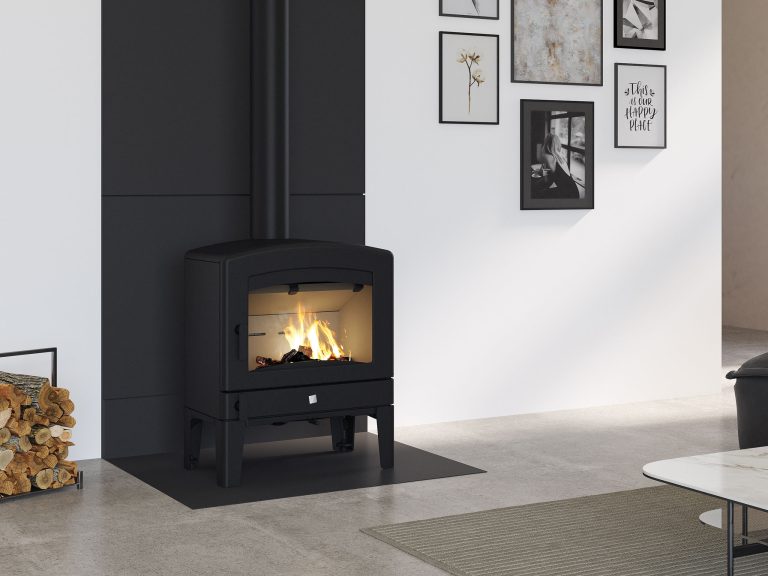
The log-burning stove is attractive for its simple, robust operation. It operates without electricity and delivers radiant heat, often perceived as softer and more enveloping. The visible flame, the crackling sound of the wood and the rapid rise in temperature all contribute to a truly comfortable living environment.
This choice is particularly well-suited to people who appreciate the authenticity of wood-burning, and who are comfortable with fuel management: wood storage, manual loading and anticipation of flare-ups. It’s a reliable, long-lasting, independent solution, ideal for use as the main heating source or as an additional heating source, depending on the project.
The insert or closed hearth: performance and integration
The insert or closed hearth is an ideal solution if you already have a fireplace, or if you want to create one. Unlike an open fireplace, which offers very low performance, the insert boosts output and transforms a decorative fireplace into a real heating appliance.
It combines the aesthetics of a flame with far superior energy performance, while blending harmoniously into the home. Depending on the configuration, it can effectively heat the main room and contribute to the overall heating of the dwelling.
Yes, a wood-burning or pellet-burning appliance is perfectly capable of providing the main heating in a home. The key to success lies in a number of factors: good insulation, appropriate sizing, strategic placement of the appliance and efficient heat circulation.
A poorly sized or positioned appliance can give an impression of inefficiency, even if it’s of good quality.
Choosing the right wattage for your wood or pellet heating appliance is an essential step in guaranteeing thermal comfort, energy efficiency and system durability. The right wattage means you can heat your home efficiently, without wasting energy or experiencing discomfort on a daily basis.
The power required depends on several key criteria:
- The surface area to be heated: the larger the volume, the greater the power required.
- Level of insulation: a well-insulated home retains heat better, and requires less power.
- Ceiling height: a high ceiling means a greater volume of air to heat.
- Climatic region: requirements differ depending on whether you live in a temperate zone or a region with harsh winters.
- Your heating habits: desired temperature, occupancy, occasional or continuous use.
A personalized study or technical visit is strongly recommended to avoid two common mistakes:
- Oversizing: an appliance that is too powerful runs in fits and starts, clogs up more quickly, consumes more energy and can cause thermal discomfort.
- Under-sizing: an insufficiently powerful appliance is unable to reach a comfortable temperature, particularly during periods of extreme cold.
To help you with your project, we provide a quick and easy power calculator. In just a few clicks, you can estimate the most suitable wattage for your home, based on its characteristics.
Find out now what the ideal wattage is for your home, using our wattage calculator.
In most cases, it’s perfectly possible to install a stove or insert on an existing flue. However, a preliminary check is essential to ensure the safety of occupants and the proper operation of the appliance.
Before installation, several points need to be checked by a professional:
- General condition of the flue: no cracks, damage or obstructions.
- The size of the flue: it must be adapted to the power rating and type of appliance envisaged.
- Leaktightness: a leaky flue can lead to smoke spillage or poor combustion.
- Compliance with current standards: the flue must meet current regulatory requirements.
In many cases, lining is required. This involves inserting a metal pipe inside the existing flue to :
- secure the installation,
- improve draught,
- ensure better smoke evacuation,
- extend the service life of the installation.
It is imperative that the installation complies with the rules of the trade, in particular NF DTU 24.1, which governs smoke-making work, as well as the appliance manufacturer’s specifications. These requirements are essential to guarantee performance, safety and insurance validity.
A technical inspection carried out by a qualified professional enables us to validate the compatibility of the existing flue and determine any adaptations required before installation.
Contact one of our dealers today.
In the vast majority of cases, yes, a dedicated air supply is highly recommended, if not essential, to guarantee the proper operation and safety of your wood-burning appliance.
A stove or insert needs oxygen for efficient combustion. In the absence of a sufficient air supply, a number of malfunctions can occur:
- Poor combustion, with loss of efficiency
- rapidly darkening glass, a sign of air shortage
- Unstable draught, which can lead to smoke spillage
- Difficulty starting up, with smoke escaping into the room.
These problems are particularly common in recent or well-sealed homes, designed to limit parasitic air intake. In this type of housing, the air needed for combustion cannot be drawn naturally from the room, making a dedicated air supply essential.
No, the absence of an existing flue is not incompatible with the installation of a wood or pellet-burning appliance. It is entirely possible to create a suitable flue, specially designed for your project.
The creation of a flue must be anticipated right from the design phase, so as to integrate the installation optimally into the home. A number of essential factors must be taken into account:
- Compliance with safety regulations, in particular regulatory distances from combustible materials
- the duct layout, which must limit offsets to ensure proper draft
- Passage through floors and roofs, taking into account technical and aesthetic constraints.
- compliance with current standards, in particular NF DTU 24.1 and the manufacturer’s specifications.
Solutions are available for both internal and external flues, depending on the configuration of your home and your aesthetic preferences.
A technical study carried out by a qualified professional will enable you to define the safest, most efficient and best-integrated solution for your home, while ensuring optimal, long-lasting operation of your appliance.
A stove or insert installation project generally involves several stages, to ensure that the solution is perfectly adapted to your home and complies with current standards. It begins with a technical visit, which enables us to analyze the configuration of the home, check technical constraints (ducting, air supply, appliance layout) and define the most appropriate solution. At the end of the visit, a personalized estimate is drawn up, including the appliance, accessories and all necessary work.
Once the quotation has been approved, the appliance is ordered. Delivery times may vary according to the model chosen and the purchase period. In June, your installer may be more available. The installation itself is then carried out, usually in 1 to 2 days, depending on the complexity of the site, particularly if it is necessary to create or modify a flue, pipe a casing or carry out specific finishing work.
Finally, installation ends with commissioning of the appliance, accompanied by detailed explanations of its operation, day-to-day use and good maintenance practices. The overall time between signing the quotation and installation depends mainly on the availability of the appliance and the time of year, with longer lead times during the heating season. By anticipating your project, you’ll benefit from faster, more worry-free installation.
No, a pellet stove doesn’t work without electricity. A power supply is essential for a number of essential functions, including automatic ignition, pellet transport to the burner, ventilation for heat distribution, and the electronic control system that runs the entire system.
In the event of a power cut, the stove can shut down automatically. This is a normal safety precaution, to ensure that the appliance remains in good working order. Once the power is restored, the stove usually restarts automatically or after a simple user intervention, depending on the model.
This is an important point to bear in mind, particularly in areas prone to frequent or prolonged power cuts. In this context, it may be appropriate to consider complementary solutions, such as an auxiliary heater or, if required, an emergency power system.
A pellet stove may indeed generate certain noises associated with its operation, notably those of the fan, the falling pellets in the crucible or the operation of the various motors. These sounds are normal and vary from one appliance to another.
Noise levels depend mainly on the model chosen, the power at which the appliance is operated and the quality of the installation. A stove that is correctly sized, correctly installed and operated at the right wattage will generally be quieter than one that is constantly running at full power. In fact, today’s technologies enable us to offer ever quieter models, with specific operating modes designed to reduce noise.
If the acoustic criterion is important to you, it’s essential to address it right from the device selection phase. This will enable you to select models designed for quiet operation, and adapt the installation to guarantee optimum comfort on a daily basis.
It is possible to heat several rooms with a single wood or pellet heating appliance, but this result is not systematic and depends heavily on the configuration of the dwelling. Heat distribution varies according to volume, room layout, insulation and existing air circulation.
A central location for the appliance naturally favors better heat distribution throughout the dwelling. The presence of a stairwell, open corridors or communicating volumes can also enable heat to be distributed more easily between different rooms and floors.
In some cases, heat diffusion solutions can be implemented to improve heating uniformity, such as ventilation systems or warm air transfer to adjacent rooms. However, these systems must be carefully designed to guarantee comfort, efficiency and compliance with current standards.
The main difference between a wood-burning stove and a pellet-burning stove lies above all in day-to-day use and the level of heating automation.
A wood-burning stove operates in a more traditional way. The user manually feeds the appliance with logs, and must anticipate the storage of wood, which requires space and good drying management. This type of heating is simple, autonomous and user-friendly, appreciated for the charm of its flame and its independence from electricity.
The pellet stove, on the other hand, offers largely automated operation. The user fills the tank with pellets, then the appliance automatically manages ignition, fuel supply, temperature regulation and programming of heating periods. However, this ease of use is accompanied by more technical maintenance and dependence on electricity, which is essential for the operation of the various mechanical and electronic systems.
The choice between these two solutions therefore depends on your lifestyle, your search for comfort, your availability on a daily basis and your sensitivity to autonomy or technology.
The difference in comfort between radiant heat and forced-air heat lies mainly in the way the heat is felt and distributed in the room.
A wood-burning stove produces mostly radiant heat. This heat spreads directly from the surface of the appliance to nearby walls, objects and people. This type of heat is often perceived as softer and more natural, with an immediate feeling of comfort when you’re near the stove. It also helps to create a warm, enveloping atmosphere.
Pellet stoves, on the other hand, are most often equipped with a ventilation system that distributes heat by forced air. This technology, like the Multifuoco® technology fitted to our pellet stoves, ensures a quicker heat-up and more even distribution of heat throughout the room, and even across several spaces. On the other hand, this heat can sometimes feel drier, particularly in very well-insulated or poorly ventilated homes.
An open fireplace heats much less because its efficiency is very low. In fact, much of the heat produced by wood combustion escapes directly through the flue, without actually being returned to the room. What’s more, the warm air in the house is drawn outside to fuel combustion, which can accentuate heat loss and create a draughty feeling.
Conversely, an insert or closed fireplace operates in a controlled environment. Combustion is better controlled, and the heat produced is captured by the walls of the appliance, then efficiently distributed throughout the room by radiation and convection. This principle makes it possible to achieve much higher efficiencies, while improving thermal comfort and reducing wood consumption.
As with any heating system, risks can arise when using a wood-burning or pellet-burning appliance, particularly if the installation does not comply with regulations or if maintenance is inadequate. Risky situations are mainly linked to non-compliant installation, a clogged flue or insufficient ventilation, which can lead to poor smoke evacuation and incomplete combustion.
These malfunctions can lead to smoke spillage, loss of appliance performance and, in the most serious cases, the risk of carbon monoxide poisoning or fire. It is therefore essential to comply with safety rules right from the design stage and throughout the life of the installation.
However, these risks can be greatly reduced if the installation is carried out in accordance with current standards and the manufacturer’s specifications. The right air supply, a correctly dimensioned and regularly maintained duct, and use in accordance with recommendations ensure safe, reliable operation.
A compliant installation is a heating system built in strict compliance with safety standards, good engineering practice and current technical specifications. The aim is to guarantee safe, efficient and long-lasting operation of the appliance, while protecting the occupants of the home.
In concrete terms, a compliant installation respects the safety distances between the appliance, the flue and surrounding combustible materials. It uses suitable, certified materials designed to withstand the high temperatures and specific stresses of wood or pellet heating. The flue gas evacuation system must also comply with the rules of smoke-making, in particular those defined by the NF DTU 24.1 standard, which governs the design, installation and sizing of flues.
Commissioning by a professional is highly recommended, as it is an essential step in guaranteeing the proper operation and safety of your wood or pellet heating appliance. At SEGUIN, all our dealers have been commissioning your new SEGUIN appliance since 1976. During this service, the professional checks the conformity of the installation, makes the adjustments adapted to your home and the appliance, and ensures that all the components are working properly.
Commissioning also helps to ensure the safety of the installation, by checking the draught, air supply and safety devices. It helps optimize the appliance’s performance, limit the risk of malfunctions and reduce fuel consumption.
Finally, your SEGUIN expert will explain how your appliance works, good operating practices, routine maintenance and any points to be aware of. This step is crucial to getting the best possible long-term comfort and safety from your installation.
The installation of a wood or pellet heating appliance is eligible for a number of financial incentives designed to encourage the energy transition and the use of renewable energies. These schemes can significantly reduce the cost of the project, provided certain conditions are met.
MaPrimeRénov’ is a government subsidy for homes used as principal residences. It applies in particular to the installation of efficient wood-burning stoves, pellet-burning stoves, inserts and closed hearths. The amount depends on household income, the type of equipment and its energy performance. It is paid once the work has been completed.
CEE (Certificats d’Économies d’Énergie) bonuses, sometimes called ‘Coup de pouce Chauffage’, are financed by energy suppliers. They take the form of a bonus or discount applied to the estimate. The amount varies according to the type of equipment installed, the location of the home and the energy savings generated. This assistance can often be combined with MaPrimeRénov’, subject to certain conditions.
Thezero-rate eco-loan (éco-PTZ) provides interest-free financing for all or part of a project, with no means-testing. It can be used to install an efficient wood or pellet heating system in an older home. This loan makes it easier to carry out the work by spreading the cost over several years.
The Fonds Air Bois is a local aid scheme set up in certain areas, particularly those where air quality is a major concern. It is designed to encourage the replacement of an old, inefficient appliance with a modern, less polluting one. The amount and conditions depend on the partner local authorities and the area concerned.
Regional, departmental and municipal grants may also be available. These vary from region to region, and can complement national schemes. They often take the form of additional subsidies or bonuses linked to energy performance or the replacement of an old appliance.
Lastly, the reduced 5.5% VAT rate applies to the supply and installation of the appliance, provided the work is carried out by a qualified professional in a home completed more than two years ago. This reduction is directly integrated into the invoice, reducing the overall cost of the project.
As of January 22, 2026, the submission of new applications has been temporarily suspended in the absence of a Finance Act. We recommend that you follow developments on the official websites.
The Flamme Verte label is a reliable benchmark for the energy and environmental performance of wood and pellet-burning appliances. It was created to help homeowners identify equipment that is more efficient, less polluting and better adapted to today’s heating and air quality requirements.
Appliances with the Flamme Verte label meet strict criteria, notably in terms of energy efficiency, low emissions of fine particles and reduced pollutant emissions. These requirements guarantee better fuel efficiency, controlled consumption and limited environmental impact.
The label’s criteria are regularly updated to encourage the development of ever more efficient appliances and keep pace with technological advances in the sector. This evolution maintains high standards and encourages the replacement of older equipment with newer, more virtuous models.
Choosing a Flamme Verte-labeled appliance means opting for a heating solution that is more efficient, more economical in use and more respectful of the environment, while meeting the standards required for access to certain financial aid.
To avoid choosing the wrong heating appliance, it’s essential to adopt a global, personalized approach, taking into account both the characteristics of the home and the conditions of daily use. The first point to check is the appliance’s power rating, which must be perfectly adapted to the surface area, volume and insulation level of the home. A poorly sized appliance, either too powerful or not powerful enough, can lead to discomfort, over-consumption and malfunctions.
Find out now what the ideal wattage is for your home with our wattage calculator.
It’s also essential to ensure that theinstallation complies with current standards and the manufacturer’s specifications. A properly installed system is the key to safety, performance and durability. The choice of fuel also plays a decisive role: using well-dried wood or certified pellets guarantees clean, efficient combustion and limits clogging of the appliance.
The presence of a clearly identified after-sales service is another key element. Reliable support ensures quick answers to questions, maintenance or malfunctions, and follow-up over time. Last but not least, commissioning with full explanations is essential to fully understand the operation of the appliance, adopt the right settings and use the heater optimally from the very first days.
Find your nearest SEGUIN dealer today!
Proper storage of firewood is essential to ensure efficient combustion and preserve the performance of your appliance. Wood must be stored in a place that is sheltered from rain and humidity, but still sufficiently ventilated to allow air to circulate freely between the logs. Ventilation is essential to prevent humidity stagnation and to keep the wood dry.
It is also advisable to elevate the wood above the ground, for example using pallets or suitable supports, to prevent rising damp. Outdoor storage should ideally be protected by a roof or tarpaulin, without ever completely enclosing the wood, to maintain good air circulation.
In addition, it’s a good idea to keep a small reserve of wood inside the home, especially during the heating season. This allows you to use wood at room temperature, which is less cold and damp, thus facilitating ignition and improving combustion quality.
Properly stored wood contributes to better heating comfort, controlled consumption and reduced maintenance of your appliance.
The choice of pellets is essential to ensure that your stove runs smoothly and to limit clogging of the appliance and flue. We strongly recommend using certified pellets, such as ENplus A1 pellets, which meet strict quality criteria.
These pellets offer greater manufacturing consistency, with controlled moisture content, constant calorific value and very low ash content. This quality ensures cleaner, more efficient combustion, reducing residue formation, burner clogging and glass blackening.
Conversely, lower-quality pellets can lead to incomplete combustion, rapid ash and bottom ash build-up, and reduced appliance performance. They can also increase the frequency of maintenance operations and, ultimately, impact the lifespan of the stove.
Using certified pellets, adapted to the manufacturer’s recommendations, helps to preserve the performance of your installation, improve comfort of use and guarantee more economical, environmentally-friendly heating.
The consumption of a wood-burning or pellet-burning appliance can vary greatly, as it depends on numerous parameters. The desired temperature, the level of insulation in the home, outdoor weather conditions, appliance settings, the quality of the fuel used and regular maintenance all have a direct influence on the amount of wood or pellets consumed.
A home with poor insulation or very low outside temperatures will naturally require more energy to maintain a comfortable temperature. Similarly, unsuitable settings or an appliance running constantly at high power can lead to overconsumption. Fuel quality also plays a major role: wood that’s too damp or poor-quality pellets burn less efficiently and increase consumption.
A sudden or unusual increase in fuel consumption may be the sign of a malfunction, such as clogging of the appliance, a draught problem or a setting that is no longer adapted to the conditions of use. In such cases, a check of the installation and appropriate maintenance can often restore optimal operation and controlled consumption.
Yes, chimney sweeping is compulsory. It is essential to ensure the safety of occupants, the proper operation of the installation and the validity of insurance cover. A poorly-maintained flue can lead to serious risks, such as chimney fires, smoke spillage and carbon monoxide emissions.
The frequency of chimney sweeping depends on local regulations, the type of appliance and the fuel used. In the majority of cases, a chimney sweep is required at least once a year, and sometimes twice a year, particularly for wood-burning appliances. Pellet stoves and inserts may also require specific maintenance operations in addition to sweeping.
Calling in a qualified professional will enable you to obtain a chimney sweeping certificate, often requested by insurance companies in the event of a claim. Regular maintenance also helps to improve appliance efficiency, reduce fuel consumption and extend the service life of the system.
It’s important to keep your chimney sweeping certificates and proof of maintenance. These documents may be requested in the event of a claim.
Rapid blackening of the glass is a common phenomenon, and usually indicates poor combustion. It can be caused by a number of factors. Using wood that is too damp, or pellets of insufficient quality, prevents complete combustion and encourages soot deposits on the glass. A lack of combustion air, for example due to the absence or inadequacy of a dedicated air supply, can also cause this type of problem.
Other frequent causes are insufficient flue draught, prolonged idling or an appliance that is oversized in relation to the needs of the dwelling. In these situations, the appliance does not operate within its optimum range, resulting in incomplete combustion and accelerated clogging. Finally, a clogged or poorly-maintained flue can disrupt smoke evacuation and accentuate glass darkening.
In most cases, a diagnosis carried out by a professional can quickly identify the source of the problem and provide a suitable solution, whether it’s a question of adjustment, advice on use or a maintenance operation. Well-controlled combustion keeps your glass cleaner for longer, and optimizes the performance of your appliance.
Draught refers to the flue’s ability to properly evacuate the smoke produced by combustion, and to ensure a sufficient supply of air to feed the fire. Poor draught occurs when this natural circulation of air and smoke is insufficient or unstable.
Poor draught can manifest itself in a number of ways, including the presence of smoke at start-up, backdrafts in the room, weak or irregular flames, or rapid clogging of the appliance and flue. These symptoms indicate incomplete combustion and sub-optimal operation of the system.
There are many causes of poor draught. It may be due to inadequate air supply, a poorly sized, partially blocked or poorly maintained flue, or insufficient chimney sweeping. The height of the flue outlet, its exposure to the wind or certain roof configurations can also influence draught. Finally, the use of poor-quality fuel, such as wood that is too damp, can accentuate these imbalances.
A technical diagnosis can pinpoint the source of the problem and enable you to implement the necessary corrective measures, whether this involves adjusting the flue, improving the air supply or advising on its use. Correct draft is essential to guarantee safety, performance and heating comfort.
The term ‘dry wood’ refers to firewood with a moisture content of less than 25% – 20% to ensure efficient, clean combustion. Wood that is too damp burns poorly, giving off little heat and producing more smoke. The result is faster clogging of the appliance and flue, lower efficiency and higher wood consumption.
Dry wood is wood that has been properly dried, generally for several months or even years depending on the species, after being cut and split. It must then be stored in a dry, well-ventilated place to avoid condensation and moisture build-up.
Using genuinely dry wood results in brighter, more stable combustion, improved heating comfort, reduced soot deposits and longer appliance life. This is an essential criterion for taking full advantage of the performance of wood heating, while respecting good environmental practices.
The most frequent breakdowns on a pellet stove are generally linked to simple causes, often avoidable with good use and maintenance practices.Fouling of the appliance is one of the main sources of malfunction. The build-up of ash or residue in the burner, internal ducts or fume extraction system can disrupt combustion and lead to safety shutdowns.
Pellet quality also plays a decisive role. Pellets of poor quality, too moist or too rich in dust, can cause ignition difficulties, irregular combustion or premature clogging of the appliance. Unsuitable settings, whether for power, ventilation or pellet feed, can also lead to over-consumption, untimely stoppages or reduced performance.
In many cases, these situations can be avoided by regular maintenance, including routine cleaning of the appliance, flue sweeping and annual servicing by a professional. A well-maintained stove operates more reliably, more economically and for longer.