
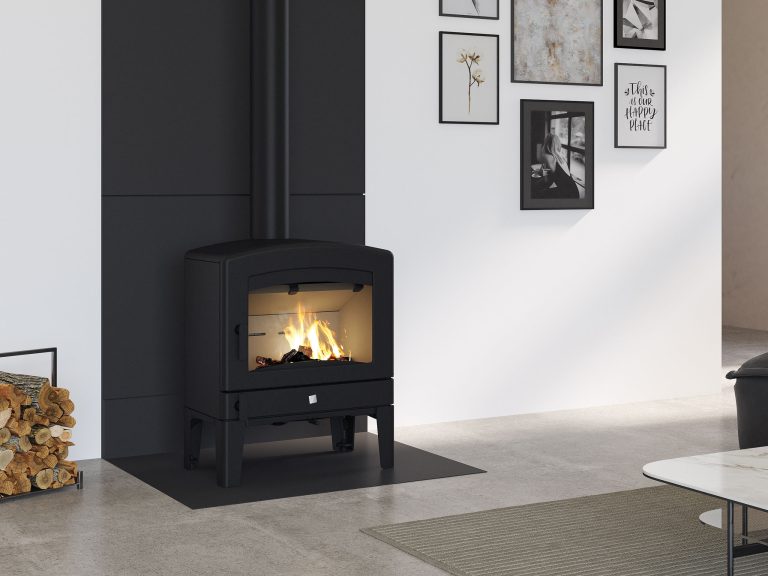



Heating with wood? It’s too expensive, not always efficient and, on top of that, it pollutes! That’s what you often hear when wood heating is mentioned. But what is the reality? Evolving technologies, increasingly efficient products, government regulations and environmental targets… all of this may well put an end to the misconceptions surrounding wood heating. Let’s take a closer look.
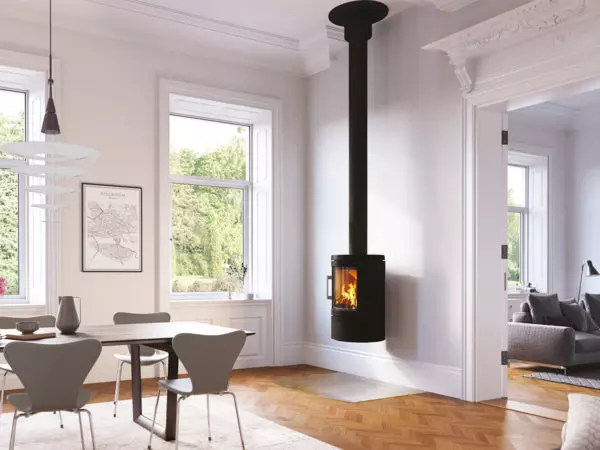
You have probably already heard it said that “wood heating pollutes!” This is a persistent misconception, even though wood is considered a “renewable” source of energy. This means that nature continuously replenishes wood.
Wood is also a carbon-neutral source of energy. Indeed, a tree absorbs CO2 throughout its life and only releases it when it decomposes. This released CO2 is then absorbed by the trees that grow where it was felled. In sustainably managed forests, new trees are planted each time one is cut down.
“Yes, but wood becomes polluting when it is burned!” That’s not entirely true! Burning wood in a fireplace, boiler or stove does not release more greenhouse gases than when it decomposes naturally.
It is sometimes thought that “burning wood can be harmful to health”. It is true that if used under poor conditions, wood heating can emit particles that may be harmful to health. To avoid this, it is enough to use a Flamme Verte certified appliance and high-quality fuel.
Another common misconception about the environmental impact of wood heating is: “Forests are being destroyed for heating.” But did you know that in France, timber harvesting is lower than the forest’s natural growth? The volume of wood in French forests actually increases each year. This is partly explained by technological advances. Whereas around 10 steres of wood were needed to heat a home 10 years ago, only 3 to 5 are required today. These arguments make wood a clean and renewable source of energy. In fact, it is the most widely used renewable energy source in France. 7.3 million households use wood heating equipment, making it a key element in helping France achieve its energy transition targets. By 2030, 38% of final heat consumption will need to come from renewable energy sources, compared with 33% in 2020.
Misconception No. 2: wood heating is inefficient
“Wood doesn’t really heat anything. Or you have to sit right in front of the fireplace.” That may have been true in the past, but it is no longer the case today. Thanks to more advanced designs and higher-performance materials, fireplaces, inserts and stoves now offer much higher efficiency. The efficiency of a wood-burning stove corresponds to the proportion of heat released into the room compared with the energy contained in the wood being burned. Today, wood-burning stoves have an efficiency of between 70% and 85%. By comparison, a traditional open fireplace has an average efficiency of 10% to 30%.
For a stove to be efficient, it is essential to choose a power output and capacity suited to your needs. Factors such as the size of the room, the insulation of the house and the climate should be taken into account. A stove’s output can range from 5 to 14 kW. If the output is too low, the stove will not be able to heat the room properly. However, if it is too powerful, wood consumption will be excessive. To find a stove that suits your needs, it is recommended to consult a professional.

It is sometimes overlooked, but financial assistance is available for installing a wood-burning stove, even though it may require undertaking more extensive work in your main residence to qualify. This is notably the case with the MaPrimeRénov’ scheme. The aim is to tackle poorly insulated homes and thereby better control energy expenditure.
A tax credit is also available for the installation of a Flamme Verte certified appliance, which guarantees the quality and the energy and environmental performance of domestic wood heating systems.
A tax credit is also available for the installation of a Flamme Verte certified appliance, which guarantees the quality as well as the energy and environmental performance of domestic wood heating systems.
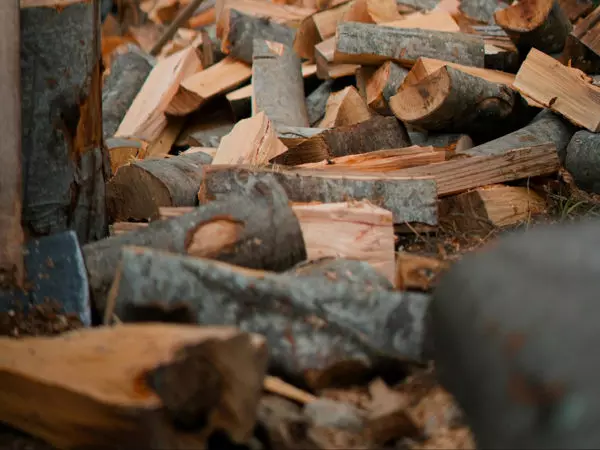
“Heating with wood is complicated!” In reality, heating with wood is not complicated; it simply requires a bit of organisation. It is essential to obtain logs or pellets before the start of winter to avoid any difficulties during the season. It is also important to plan for a dry and accessible storage space.
On a daily basis, the appliance needs to be refuelled with wood or pellets. Be aware that some recent pellet stoves allow you to programme their operation at set times or maintain the desired room temperature, all via an app on your phone. An added level of comfort to the advantages of pellet stoves!
As you will have understood, wood heating is therefore relatively clean, efficient, cost-effective and not as restrictive as it may seem. And if you also consider the soothing benefits of watching the flames, you have every reason to adopt it!