
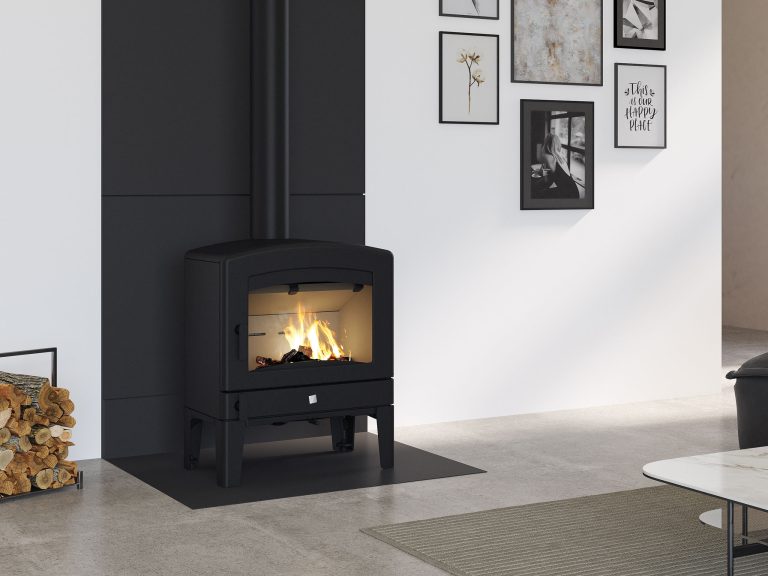


Combining thermal comfort with aesthetics: this is what the bioethanol stove offers. Increasingly popular, this appliance appeals thanks to its ease of installation and use, as well as its limited environmental impact. An ideal solution for enjoying the gentle glow of a flame without the constraints of a traditional fireplace.
The bioethanol stove continues to win people over. Easy to install and use, stylish and cosy, it fits into every interior, from traditional homes to contemporary flats… But do you really know everything about bioethanol? The experts from the SEGUIN network explain what you need to know about this fuel.
Qu’est-ce que le bioéthanol ?
Le bioéthanol est un alcool d’origine végétale, obtenu par fermentation de sucres naturels issus de matières végétales comme la betterave sucrière, la canne à sucre, le maïs, le blé, etc. Il s’agit d’une énergie provenant de sources naturelles qui se renouvellent à un rythme supérieur à celui de sa consommation.
Et ce n’est pas le seul aspect écologique du bioéthanol. Sa combustion, sans émission de particules fines, sans fumée ni gaz toxiques, et au bilan carbone très faible, en fait un combustible exemplaire d’un point de vue environnemental.
On confond parfois le bioéthanol et l’éthanol. L’éthanol désigne l’alcool pur, utilisé en industrie et comme carburant, souvent issu de la pétrochimie. Le bioéthanol est, quant à lui, à base d’alcool végétal, issu de la biomasse. Lorsqu’il est question de chauffage domestique, on utilise exclusivement du bioéthanol, vendu sous forme liquide.
On le trouve généralement en bidon, en magasin de bricolage.

Why choose bioethanol as a source of heat?
What makes the bioethanol stove so successful is, above all, its ease of installation. This appliance requires no flue, no connections and no major building work. It can be installed anywhere, including in homes without a flue and in flats… even rented ones! In fact, this type of appliance is easy to move and can follow you wherever you go.
And wherever you install it, the bioethanol stove provides immediate, pleasant and relatively powerful heat. Although it is a supplementary heating solution, it is capable of heating a room on occasion, such as a living room or even a conservatory or patio. Yes, your bioethanol stove can also light up and warm your outdoor evenings, which can sometimes be a little chilly.
What’s more, it is easy to move, with some models even fitted with castors. It can be positioned and repositioned as you wish, depending on your needs and preferences, once it has been switched off and completely cooled. And there is no risk of damaging a newly decorated room or freshly laid flooring: the bioethanol stove has clean combustion. So you don’t have to worry about stained walls or marked floors.
When it comes to maintenance, this type of appliance is very low-maintenance. It does not require chimney sweeping, as it is not connected to a flue. Simply make sure to clean it regularly to remove dust and any light build-up.
Finally—and this is one of this type of appliance’s greatest strengths—it is a true decorative asset. The bioethanol stove instantly brings style and character to your interior, whether it is classic, rustic, modern or design-led. Whether lit or unlit, it is that small feature that makes all the difference. And once in use, the clearly visible flame creates an immediate sense of calm and relaxation.
Installation, safety, choosing the right model: what you need to know before opting for a bioethanol stove
Although a bioethanol stove is easy to install in the home, even in a small space, certain precautions should still be observed. It is recommended to install it in a well-ventilated room, but without direct draughts. Do not place your stove in an enclosed room smaller than 10 m². Position it at a safe distance from flammable materials and surfaces and, of course, ensure that children are kept away from the appliance.
For added safety, remember to ventilate the room at least once every 24 hours. Clean the burners regularly and check the components of your stove to ensure everything is in proper working order.
When choosing your model, keep in mind that it is a supplementary heating solution. This type of appliance is not intended to be your main source of heating. In terms of performance, opt for a model with a maximum output of between 2 and 5 kW, depending on the model. This is ideal for a room of 30 to 50 m². Also remember to check the burn time. Some models can provide up to 15 hours of operation, depending on the setting.
Finally, opt for models that include built-in safety features: CO₂ sensors, fuel container detection, air renewal per hour, and so on.
As a general rule, avoid discounted or low-end products, as they may damage your appliance and compromise your safety. Instead, choose certified brands.
The average price of bioethanol in 2025 ranges between €3 and €4 per litre, depending on DIY retailers and current promotions. Consumption typically varies between 0.4 and 0.7 litres per hour.
The bioethanol stove therefore offers an aesthetic, modern and practical supplementary heating solution. Easy to install, use and maintain, all that remains is to find the model that suits you.