




Factors to consider before choosing a wood-burning stove
1. The stove’s heat output
The first question to ask is: What do you intend to use this wood-burning stove for? Will it be your main source of heating, or simply a supplementary or decorative appliance? To determine the appropriate heat output, you need to take into account the area to be heated as well as your home’s insulation. Online calculation tools can help you estimate the required heat output.
2. The materials used in the stove
Traditionally, stoves were made of cast iron. But today, other materials have joined the range, offering both improved aesthetics and better performance. As a result, more stylish and modern wood-burning stoves are generally constructed from steel with refractory interiors, allowing for much cleaner lines whilst delivering optimal performance. Cast iron, despite its traditional appearance, has the advantage of distributing heat over a long period of time, thanks to its thermal inertia.
Depending on your aesthetic preferences and your requirements in terms of heat distribution, you can therefore choose between a cast-iron or steel stove.
Choosing between a space heater and a central heating system
When installing a wood-burning stove, it is important to decide whether it will be used as the main heating source or simply as a supplementary heating source. This decision will have a significant impact on the output and the type of stove you should choose.
A wood-burning stove as the main heating source
If your aim is to use a wood-burning stove as your main source of heating, you will need to choose a model with sufficient heat output to cover the entire area to be heated. To do this, you will need to take into account the floor area of your home, its insulation, and the volume to be heated. An online calculator can help you determine the appropriate heat output.
The wood-burning stove as a supplementary heating source
If the wood-burning stove is only intended to supplement your main heating system, you’ll have more flexibility when choosing its output. You can then focus more on factors such as design, ease of use and energy efficiency. Output will no longer be the most important factor.
Whatever your project, please don’t hesitate to contact a heating expert at Cheminée SEGUIN for advice on choosing a wood-burning stove.
Choosing the right output for your wood-burning stove
When you’re thinking of installing a wood-burning stove in your home, choosing the right heat output is crucial. This decision depends on several key factors.
The area to be heated
One of the key factors to consider is the size of the area in your home that you wish to heat with the wood-burning stove. Here are a few guidelines:
- For a house smaller than 100 m², choose a stove with a heat output of 4 to 5 kW
- For a house between 100 and 150 m², choose a stove with an output of 5 to 7 kW
- For a house larger than 150 m², choose a stove with a minimum output of 7 kW
Other factors to consider
Although floor area is the primary factor, other factors also come into play when determining the ideal power:
- The location of your property and its aspect
- The quality of your home’s thermal insulation
- The desired heating temperature
- The layout of the rooms and bioclimatic features
Please feel free to seek advice from a Seguin professional to help you determine the right capacity for your home and your needs.
The efficiency of the wood-burning stove
When choosing a wood-burning stove, the appliance’s efficiency is a key factor to consider. This factor determines the stove’s ability to efficiently convert the energy from the wood into heat for your home.
Definition of yield
The efficiency of a wood-burning stove can be defined as the ratio of the energy produced to the amount of wood consumed. Expressed as a percentage, high efficiency ensures optimal heat output with minimal wood consumption.
Performance of wood-burning stoves
To be eligible for the Flamme Verte label, a wood-burning stove must achieve a minimum efficiency of 70%. However, an ideal efficiency is closer to 80%. This level of performance is significantly higher than that of open fireplaces, which generally do not exceed 10 to 15%.
Most efficient models of wood-burning stoves
Double-combustion (post-combustion) stoves and masonry heaters are among the most efficient appliances in terms of performance. They are often used as the main heating solution for homes.
At Cheminée Seguin, the detailed technical specifications for each wood-burning stove clearly indicate their efficiency, output and CO₂ emissions.
The different styles and materials of wood-burning stoves
In addition to technical criteria such as output or materials, the choice of a wood-burning stove is also based on its aesthetics and style. At Cheminée SEGUIN, you will find a wide range of models offering varied designs and different styles.
Traditional wood-burning stoves
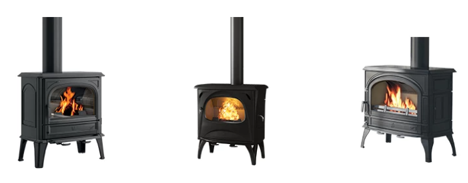
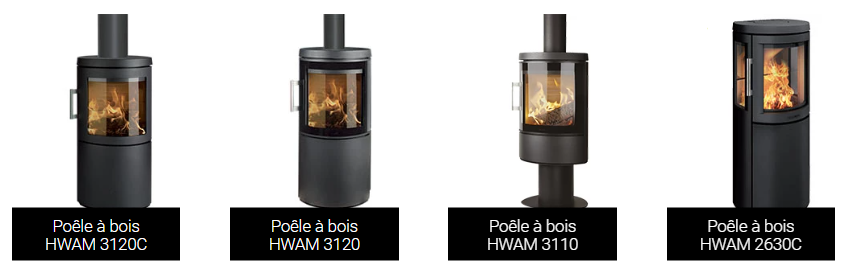
Traditional-style wood-burning stoves are generally made of cast iron. They are characterised by clean lines and a rustic appearance that blends perfectly into period interiors. Their cylindrical or cubic shape gives them a simple and elegant aesthetic.
Contemporary wood-burning stoves
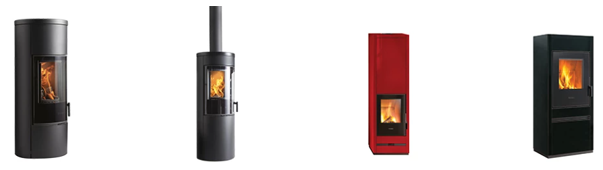
For a more design-led and modern style, steel wood-burning stoves are an excellent option. Their clean lines and original shapes make them true decorative features in their own right. They fit perfectly into interiors with a contemporary and minimalist feel.
Hybrid wood-burning stoves
Some wood-burning stoves combine the advantages of both traditional and contemporary models. They therefore bring together a clean design with cast iron construction that provides high thermal inertia. These “hybrid” appliances strike a balance between performance and aesthetics.
Whatever your interior style, you are sure to find a wood-burning stove that will match it perfectly.
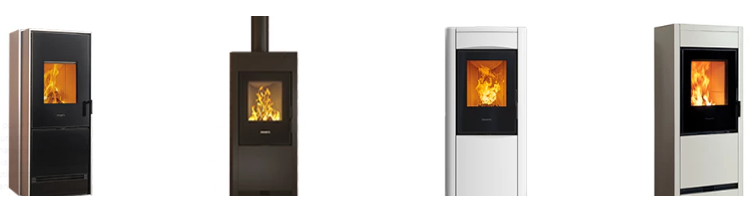
At Cheminée SEGUIN, you can also find hybrid stoves that allow you to burn both logs and pellets.
Firebox size and stove dimensions according to the home
When choosing a wood-burning stove, the size of the firebox is an important factor to consider, as it determines the size of the logs you will be able to use.
The importance of the firebox size
A large firebox can accommodate longer and more numerous logs. This provides longer heating autonomy and more stable combustion. However, the stove will also be bulkier.
Prioritise quality over size
However, you do not necessarily need a large wood-burning stove. A high-quality model with good thermal inertia can provide sufficient output and autonomy to maintain a comfortable temperature in your living space. The key is to choose a wood-burning stove that suits your needs, rather than overestimating the size of the firebox.
Installation and positioning of the wood-burning stove
Installing a wood-burning stove requires careful consideration of its placement in order to optimise its performance and heat distribution within your home.
The flue (smoke evacuation duct)
If your home is already equipped with a flue, the wood-burning stove is naturally installed in line with it. If a new one needs to be created, this will result in additional costs on top of the purchase.
Choosing the right location
If your home does not yet have a flue, you have more flexibility when it comes to positioning your wood-burning stove. However, you should ensure that you choose a location that optimises heat distribution throughout the home. Poor placement could result in one room becoming overheated while the rest of the house remains cold.

Different placement options
Wood-burning stoves can be installed in various configurations:
- Against a wall
- In a corner of the room
- In the centre of the living space
- Between two rooms for optimal heat distribution
The location of your wood-burning stove is therefore a key factor to consider for a successful installation and efficient heating of your home. If you need further information, take a look at our guide on installing a wood-burning heating appliance.
Standards to comply with before installing a wood-burning stove
When installing a wood-burning stove in your home, it is important to take certain regulatory standards into account to ensure the safety and proper operation of the appliance.
The DTU 24.1 standard
The main standard to comply with is DTU 24.1. This reference document governs the installation of the flue for a wood-burning stove. It sets out all the technical specifications to follow in order to ensure the installation is compliant.
Rest assured, professional installers are fully familiar with this standard and will be able to guide you to ensure your installation is fully compliant.
Other points to consider
Beyond the DTU 24.1 standard, you will also need to consider other regulatory aspects, such as:
- The type of appliance (log-burning, pellet, etc.)
- The material of the stove (cast iron, steel, etc.)
- The size of the appliance according to your needs
Do not hesitate to seek advice from a Seguin consultant to ensure you choose a wood-burning stove that is compliant and suited to your home. You can also refer to our guide on installing a wood-burning stove or fireplace in a flat.
The lifespan of a wood-burning stove
Like any appliance, a wood-burning stove has a lifespan that varies depending on the quality and complexity of its components. It is important to maintain your appliance properly to ensure its longevity.
Average lifespan
A well-maintained log-burning stove can last between 10 and 20 years. By contrast, a pellet stove, which includes more mechanical components (auger, fan, etc.), generally has a shorter lifespan, of around 10 years.
Manufacturers’ warranties
Wood-burning stoves also come with a manufacturer’s warranty, which can range from 2 to 10 years depending on the brand.
Maintenance, the key to longevity
Regular maintenance of the firebox and the flue is essential to ensure the proper operation and long-term safety of your wood-burning stove:
- Annual (or even biannual) chimney sweeping by a certified professional
- Regular emptying of the ash drawer
- Cleaning the stove glass
Only a qualified chimney sweep can issue a sweeping certificate, confirming that the maintenance has been properly carried out in the event of a claim. Need more information about maintaining your wood-burning stove?
Why choose a wood-burning stove over another heating solution?
In addition to wood-burning stoves, there are other ways to heat a home, such as electric heating, gas boilers or oil-fired boilers. So why choose a wood-burning stove?
The wood-burning stove: an independent and cost-effective heating solution
Log-burning stoves are self-sufficient heating appliances that do not require an electrical connection to operate. Although the fuel is loaded manually, the cost of producing heat is far more economical than with electric heating, for example.
Heating in an environmentally friendly way
Compared with other so-called “traditional” heating methods, heating with wood is recognised as an environmentally friendly solution. Wood is a renewable energy source with a low environmental impact, unlike fossil fuels.
An ideal supplementary heating solution
Wood-burning stoves are often used as supplementary heating or during the shoulder seasons, avoiding the need to run central heating continuously. They help reduce energy consumption while providing a comfortable level of warmth.
To help you choose and install your wood-burning stove, do not hesitate to contact a Seguin expert.
What financial support is available to buy a wood-burning stove?
Buying a wood-burning stove represents a significant investment for many households. Fortunately, there are various forms of financial support available to help you with this purchase.
Tax credits
Installing a high-performance, energy-efficient wood-burning stove may allow you to benefit from tax credits. These grants are subject to certain conditions, particularly if your appliance is Flamme Verte certified. Check with your installer or the relevant authorities to find out what steps to follow.
Local grants
Some local authorities (regions, departments, municipalities) also offer financial support for the purchase of wood-burning stoves. The amount and eligibility conditions vary depending on the area. Do not hesitate to enquire with your local council or regional authority.
Government grants
At national level, government schemes such as MaPrimeRénov’ can also help you benefit from financial support for the purchase and installation of your wood-burning stove. Here again, eligibility conditions need to be checked.
By combining these different forms of financial support, you can significantly reduce the cost of purchasing your wood-burning stove. You can also refer to our guide on all the available grants for investing in a wood-burning stove.
What budget should you plan for investing in a wood-burning stove?
When planning to purchase a wood-burning stove, it is important to have an overall view of the budget required. This includes not only the cost of the appliance itself, but also that of materials and labour.
The cost of the appliance
The cost of materials
In addition to the appliance, you will need to budget for the technical components required for installation, such as the flue, roof outlet, connections, air intake grilles, etc. Typically, you should allow between €1,000 and €3,000 for these materials.
Labour costs
Finally, labour costs for installation can range from €500 to €2,000, depending on the scope of the work (creating a flue, removing an old appliance, etc.).
Overall, the total cost of investing in a wood-burning stove can range from €2,500 to €7,000. However, do not forget that financial support such as MaPrimeRénov’ can significantly reduce the overall cost.