
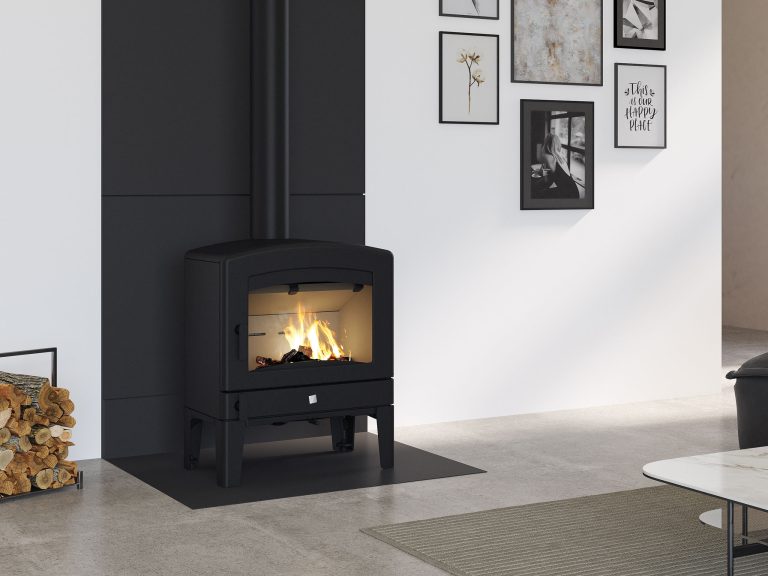



To stay warm throughout the winter without driving up your energy bills, a wood-burning stove will be your best ally—provided it is used correctly. Discover our expert advice to fully understand your appliance and adopt the right habits.
The ideal temperature for your wood-burning stove
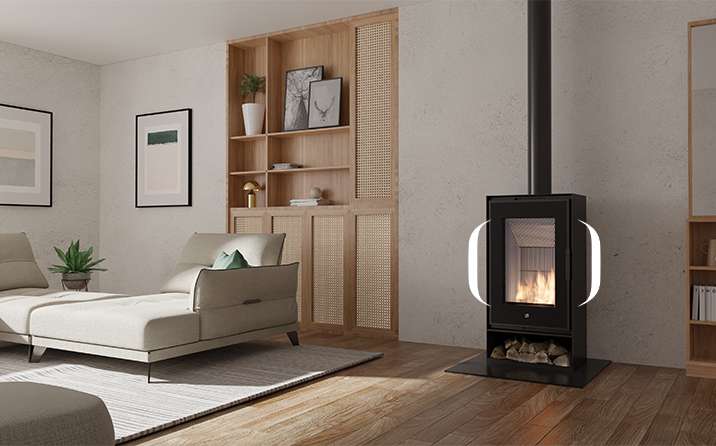
To ensure complete satisfaction, your wood-burning stove should be neither too hot nor too cold. A subtle balance, but one that is easy to achieve. To use your appliance properly and adapt it to your needs, it is important to understand how it works.
A wood-burning stove operates optimally when it reaches around 300°C to 400°C at the flue outlet. If this temperature is too low, you will produce more smoke and less heat. Conversely, if the temperature is too high, it may damage your appliance and increase your wood consumption.
To monitor the temperature, you can use a stove thermometer installed on the flue outlet.
The ideal wood for optimal heat
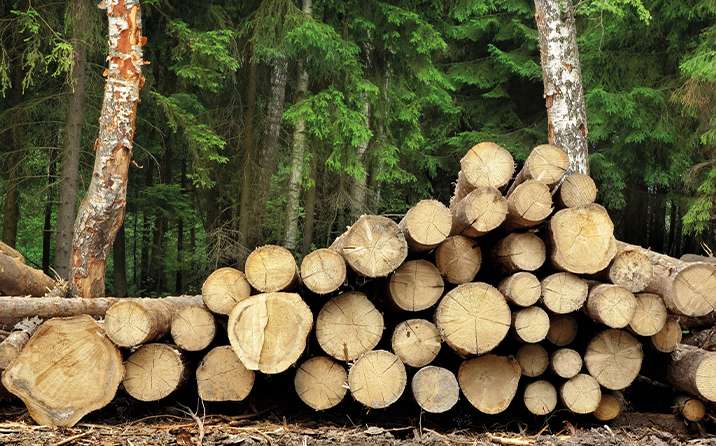
The secret to pleasant and long-lasting heat lies largely in the quality of the wood you use. For efficient combustion, logs must be perfectly dry. Damp wood produces more smoke, generates less heat, and clogs up your appliance. To reduce the moisture content of the wood to its optimal level (around 20%), it should be seasoned for between 18 and 24 months.
The type of wood you use is also important. Hardwoods such as oak, beech, hornbeam or maple have a higher density. They burn more slowly and provide intense, long-lasting heat. In contrast, softwoods such as fir or pine burn more quickly. They are ideal for lighting a fire quickly, but require frequent refuelling.
Ideally, you should start your fire with softwood, then switch to hardwoods for a slow and steady burn.
Finally, make sure that the size of your logs is suited to your appliance, meaning they should be slightly shorter than the length of your firebox.
Two things to know to regulate the temperature of your wood-burning stove
Depending on the room, the time of year and your daily routine, you will want and need to be able to easily adjust the temperature of your wood-burning stove. To regulate the temperature of your stove and avoid wasting wood, there are two essential things to know. Did you know, for example, that you can control the intensity of the flame by opening or closing the air vents? Most wood-burning stoves are equipped with two air supply systems: primary (at the bottom) and secondary (at the top). By adjusting these vents, you control the amount of oxygen reaching the fire. If you want more heat, you can increase the air supply to encourage combustion. Conversely, to reduce the heat, simply decrease the air supply by closing these vents.
The amount of wood you add also plays a role in the heat produced by your stove. To maintain a consistent temperature, it is advisable to feed your appliance regularly with small amounts of wood on a bed of embers. If you want more heat, increase the amount. Conversely, to lower the temperature, reduce the amount of wood you add to your stove.
Maintenance: the secret to a healthy wood-burning stove
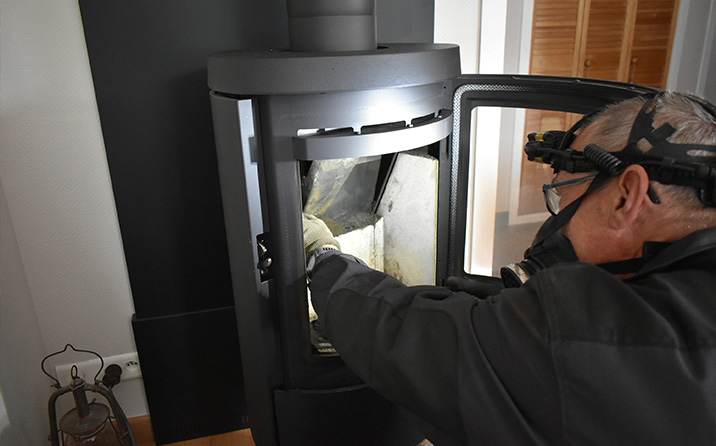
Maintaining your wood-burning stove is an essential habit to adopt in order to ensure its safety, its proper operation over time, and to maximise its efficiency. Indeed, a poorly maintained stove will lose efficiency and consume more wood.
First of all, there is simple and regular maintenance to be carried out during the period of use of your appliance. It is recommended to empty the ashes every day and clean the glass about once a week. Did you know that you can use ashes to clean the glass of your stove? Simply dampen a cloth, paper towel or newspaper, dip it in cold ashes and gently rub in circular motions. Then rinse with a clean damp cloth and dry with a soft cloth.
You can also use a special stove glass cleaner, but be sure to use it sparingly and avoid applying it to the seals, as they may deteriorate.
The ash pan and the inside of the stove can be vacuumed weekly. Then carry out a more thorough internal cleaning of your stove about once a month. To do this, after removing the bulk of the ashes with a shovel, you can use an ash vacuum to get rid of the remaining residue. Make sure the ashes are completely cool before handling them. Also clean the inner walls of the stove by scraping with a soft brush, or a wire brush if the inside of your appliance is made of cast iron.
It is also essential to have your flue swept at least twice a year, including once during the period of use, by an RGE Qualibois-certified professional. They will also check that your stove is functioning properly and provide you with some usage advice. This twice-yearly chimney sweeping is a legal requirement.
By adopting these good practices, you can ensure that your stove remains safe and efficient over time.