
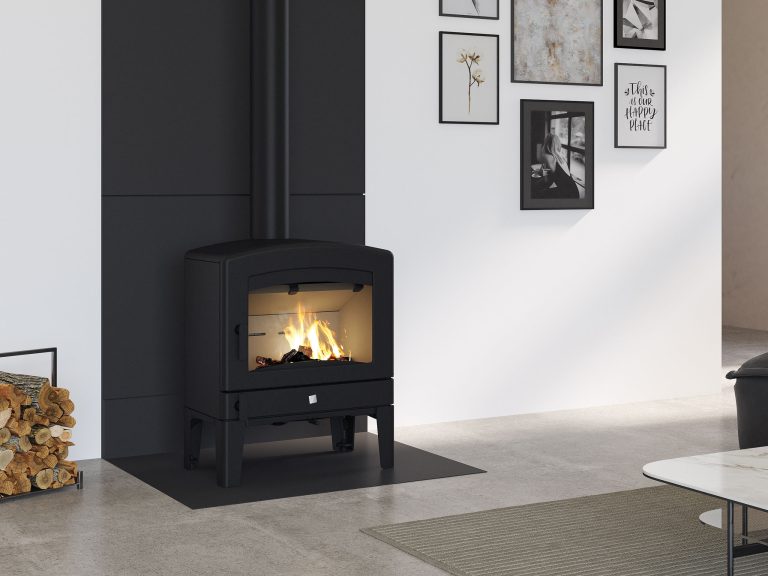




Before each winter season, it is important to prepare your wood or pellet heating appliance so you can enjoy a worry-free winter. Here are four tips to tick off before winter.
Tip no. 1: have your heating appliance checked
Whether you use a wood-burning stove or a pellet stove, it is essential to have it checked every year to ensure its performance, safety and longevity. In addition to the daily and monthly maintenance you carry out yourself (see below), it is mandatory to call in a professional once a year to ensure that your heating appliance is functioning properly.
This is a full maintenance service of your installation, during which the professional:
- thoroughly cleans the flue by using a brush to remove deposits (chimney sweeping);
- checks the overall condition of the stove;
- checks the safety systems and carries out a full inspection of the appliance.
The professional also makes a few adjustments to the settings in order to optimise the appliance’s performance. Ideally, this maintenance should be carried out before the period of use.
If you have a traditional fireplace, annual chimney sweeping by a professional is also a legal requirement.
Beyond the legal requirement, keep in mind that having your flue swept offers many everyday benefits: it reduces pollution and the risk of accidents, and improves the appliance’s efficiency, helping you save money.
Tip no. 2: adopt the right habits for better efficiency
To achieve optimal efficiency from your stove, first pay attention to the wood you use: remember that the best wood is untreated. Therefore, avoid using wood waste, old furniture or painted wood. Also make sure to use logs that are cut to the correct size.
When it comes to storage, the basic rule is to avoid moisture. When using logs, it is essential that the wood is dry to optimise the performance of your fireplace or wood stove. The moisture content should be below 20%. The wood should therefore be stored in a dry and well-ventilated place, such as under a shelter. Make sure to keep the sides open to allow proper airflow. Also avoid placing it directly on the ground—use a pallet instead so that air can circulate underneath the wood.
If you use pellets, moisture will once again be your enemy, as they must have a moisture content of less than 10% to be usable. Therefore, pellet bags should be stored in a dry place, away from any heat source, such as in a garage or utility room. Keep them in their original packaging to protect them from any contact with water.
Tip No. 3: stock up on logs or pellets
Each year, as winter approaches, it is necessary to stock up on fuel (wood or pellets). Here are a few tips to accomplish this task with flying colours.
First of all, favour certified and natural wood. Indeed, wood is a renewable and carbon-neutral fuel, provided it comes from sustainably managed forests. Labels will ensure that the wood you purchase meets this requirement. The most common are FSC (for Forest Stewardship Council) and PEFC (for Programme for the Endorsement of Forest Certification).
You will also need to choose the right type of wood: beech, ash, birch, oak and many others… These different types of wood do not burn in the same way. This is because a cubic metre of wood does not weigh the same depending on the species chosen. It is this difference in weight that affects the amount of heat produced during combustion: this is known as the calorific value.
- A light wood, such as poplar or fir, is fairly easy to light and burns readily, even quickly. It will therefore need to be replenished quite regularly.
- Conversely, dense woods such as beech, oak or ash take longer to burn and therefore produce heat for a longer period.
To make it easier to stock up on fuel, turn to suppliers offering home delivery. Bags of pellets, bags of logs (cut to the right size) or sacks of wood can be delivered on pallets to make storage easier. Whether you choose wood or pellets, we recommend purchasing fuel sourced from French forests. Some suppliers offer wood that is 85% sourced from sustainably managed French forests, packaged in France and available all year round.
Tip No. 4: maintain your stove or fireplace on a daily basis
Finally, to ensure the optimal performance of your wood or pellet stove, it is essential to maintain it on a daily basis. Before winter returns, it is time to recall the right practices. A quick reminder!
Regular maintenance of your pellet stove is essential to ensure its efficiency, safety and longevity. It will take you a few tens of minutes each week, but it will make all the difference.
Each day, remember to clean the burn pot (where the pellets are combusted) and the ash pan. When the stove is cold, simply open the door, remove the burn pot and empty the ashes and any other residue. Take the opportunity to clear, if necessary, any holes in the burn pot that may be blocked. All that remains is to put the burn pot back in place, and you’re done!
Once a week, you should also empty the ash pan and vacuum the firebox. Take the opportunity to clean the glass as well (making sure it is completely cold beforehand). To do this, use a soft, slightly damp cloth. For stubborn marks, apply a product specifically designed for pellet stove glass. Be careful not to use flammable cleaning products.
Once a month, you can also carry out a thorough cleaning of your appliance, in particular by cleaning the combustion chamber. To do this, once the stove has cooled down, remove the burn pot and the ash pan, vacuum the entire combustion chamber, clean the walls with a soft brush, and clean the heat exchangers by brushing between the fins to remove any soot.
As for the fireplace, the interior should also be maintained regularly. Once the fire is completely out and the hearth has cooled down, remove the ashes using a vacuum cleaner or a small brush and pan. You can also keep the ashes for reuse: to fertilise your plants and garden, clean your windows, and more. For a more thorough clean, avoid chemical detergents. Instead, opt for a stiff brush, hot water, and soap or white vinegar.
If you have an insert, clean the glass once a week using a damp cloth and white vinegar or… the ashes from your previous fires!