



Installing a wood-burning stove in your home is a project that requires careful preparation and compliance with numerous safety standards. Whether you plan to have your appliance installed by a professional or are considering installing it yourself, it is essential to fully understand each step. Before starting the installation process, take a look at our guide to choosing the type of wood-burning stove suited to your needs.
Prerequisites and preparation before installing a wood-burning stove
Essential technical and administrative checks
Installing a wood-burning stove requires several essential checks. The layout of your home, particularly the type of room to be heated and its level of insulation, will largely determine the technical characteristics of your wood-burning heating appliance. RGE-certified professionals from the Seguin network systematically carry out a thorough assessment of your home to ensure optimal installation.
Checklist of preliminary checks:
- The load-bearing capacity of the floor where the stove will be installed
- Compliance with DTU 24.1 standards for the flue system
Budget and financial support for installing your wood-burning stove
Installing a wood-burning heating appliance is an investment that may be eligible for several support schemes. By using RGE-certified installers from the Seguin network, you can access:
- MaPrimeRénov’: up to €2,500 depending on income
- Energy Savings Certificates (EEC – Energy Efficiency Certificates)
- Reduced VAT at 5.5% for installation work
- Regional grants specific to wood heating
Choosing the ideal location to install your wood-burning stove
Technical criteria for optimal positioning within the room
To install your wood-burning stove effectively, choosing the right room and location is crucial. Seguin experts analyse several factors to determine the best place to position your appliance:
- A central position in the main room to optimise heat distribution
Safety distances for installing a wood-burning stove
When installing a wood-burning stove, safety standards impose strict minimum distances:
- Roof outlet: The flue must extend at least 40 cm above any part of the roof located within 8 metres.
In all cases, a Seguin expert will be able to guide you and ensure that current standards are met, so that you can use your wood-burning stove safely
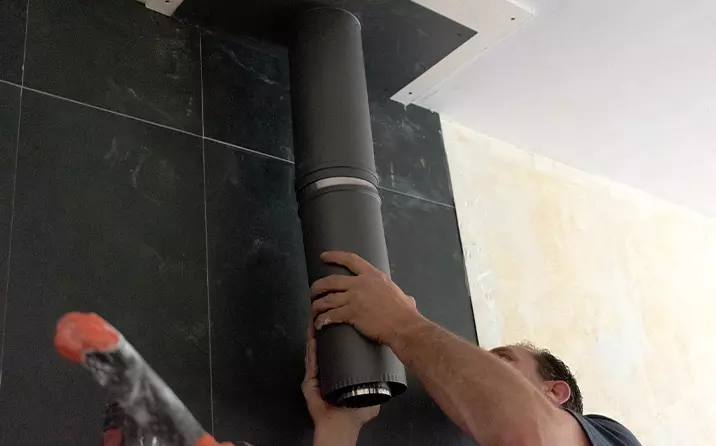
The chimney flue, whether existing or newly installed, must have a diameter suited to the type of stove chosen. Seguin professionals ensure strict compliance with DTU 24.1 standards, which govern:
- The flue diameter according to the output of the wood-burning stove
- The appropriate lining for renovating existing flues
- Thermal insulation of the chimney flue
1. Preparing the room and protecting the floor
- Pose d’une plaque de protection au sol :
- If the floor is combustible (wood, parquet, carpet), a fire-resistant protective plate is required. It can be made of steel, tempered glass or ceramic.
- The plate must extend 30 cm in front of the stove and 20 cm on the sides, in accordance with the standards.
- Clean the floor before installation to ensure a flat and stable surface.
- Installation des protections murales :
- If the wall behind the stove is combustible, install a heat shield (steel plate, fire-resistant panel or certified insulation).
- Ensure that the wall protection is installed with a ventilated air gap between it and the wall, in order to dissipate heat.
- Vérification de la planéité :
- Use a spirit level to check that the floor is properly level where the stove will be installed.
- If necessary, adjust with shims to ensure the stability of the stove.
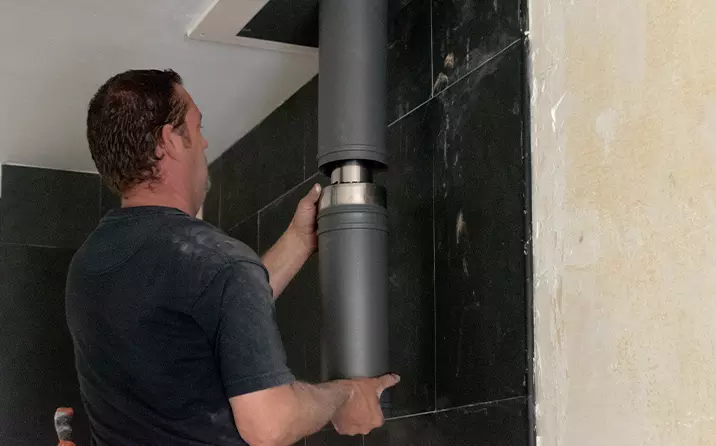
- Création d’une entrée d’air :
- Modern stoves often require a dedicated air inlet to operate properly, especially in well-insulated homes.
- Drill through a wall or floor to create an external air intake. Choose a location close to the stove to reduce pressure losses.
- Pose d’une grille de ventilation :
- Install a grille over the air intake to prevent debris, insects or animals from entering.
- Check the required dimensions in the manufacturer’s manual, based on the stove’s output (generally expressed in cm² of free area).
- Vérification du tirage :
- Insufficient or excessive draught can affect the stove’s performance.
- Test the flue using a smoke pellet or a measuring device to ensure it is suitable. Adjust if necessary with a draught regulator.
3. Installing and connecting the wood-burning stove
- Mise en place précise du poêle :
- Position the stove in accordance with the safety distances recommended by the manufacturer.
- Check once again that the stove is properly aligned and stable before proceeding with the connection.
- Raccordement au conduit de cheminée :
- Use suitable pipes, in accordance with the manufacturer’s recommendations (generally enamelled steel or stainless steel).
- Installation des joints d’étanchéité :
- Apply sealing gaskets (fibreglass rope seals or high-temperature resistant sealant) at the connections between the stove and the flue.
- Ensure that each connection is properly tightened to prevent smoke leaks.
Final check before use:
- Check that all components are properly installed (protection, connections, air inlets).
- Test the appliance with an initial low-intensity burn to check the draught, smoke emissions and sealing.
- If necessary, have the installation checked by a certified professional to ensure it is compliant.
- Certification of each type of stove in accordance with European standards
- Compliance with DTU 24.1 standards for the installation of the flue
- Ongoing training for RGE-certified installers in installation techniques
- Manufacturer warranties validated by professional installation
After installing your wood-burning stove, Seguin experts proceed with:
To ensure the longevity of your wood-burning stove, regular maintenance is required:
- Chimney sweeping of the flue twice a year
- Regular cleaning of the stove glass and firebox
- Annual inspection of the flue lining and seals
- Periodic inspection of the flue system
In conclusion, installing a wood-burning stove requires expertise and precision. To ensure the safety and optimal performance of your wood heating system, take a look at our guide to choosing your appliance and place your trust in the Seguin network of certified installers. With 45 years of experience and a network of 170 RGE-certified professionals, we guarantee installation carried out to the highest standards, in compliance with current regulations and ensuring maximum efficiency of your wood heating system.
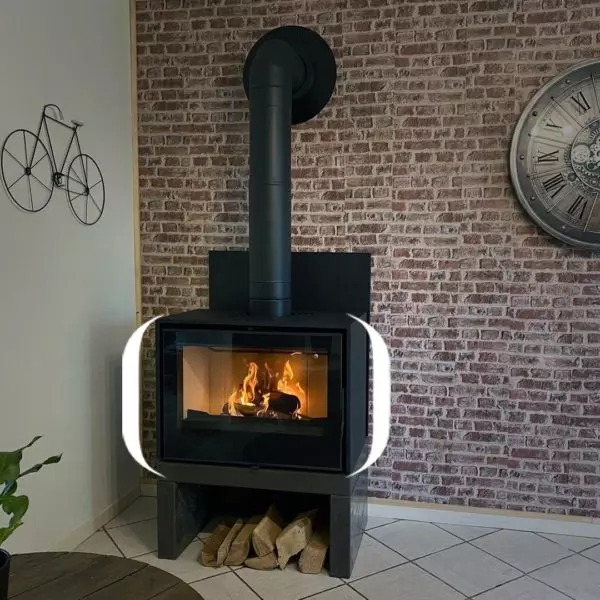
The main standard to comply with is DTU 24.1. This reference document governs the installation of the flue for a wood-burning stove. It sets out all the technical specifications to follow in order to ensure the installation is compliant.
Rest assured, professional installers are fully familiar with this standard and will be able to guide you to ensure your installation is fully compliant.
Other points to consider
Beyond the DTU 24.1 standard, you will also need to consider other regulatory aspects, such as:
- The type of appliance (log-burning, pellet, etc.)
- The material of the stove (cast iron, steel, etc.)
- The size of the appliance according to your needs
Do not hesitate to seek advice from a Seguin consultant to ensure you choose a wood-burning stove that is compliant and suited to your home.
The lifespan of a wood-burning stove
A well-maintained log-burning stove can last between 10 and 20 years. By contrast, a pellet stove, which includes more mechanical components (auger, fan, etc.), generally has a shorter lifespan, of around 10 years.
Manufacturers’ warranties
Wood-burning stoves also come with a manufacturer’s warranty, which can range from 2 to 10 years depending on the brand.
Maintenance, the key to longevity
Regular maintenance of the firebox and the flue is essential to ensure the proper operation and long-term safety of your wood-burning stove:
- Annual (or even biannual) chimney sweeping by a certified professional
- Regular emptying of the ash drawer
- Cleaning the stove glass
Only a qualified chimney sweep can issue a sweeping certificate, confirming that the maintenance has been properly carried out in the event of a claim.
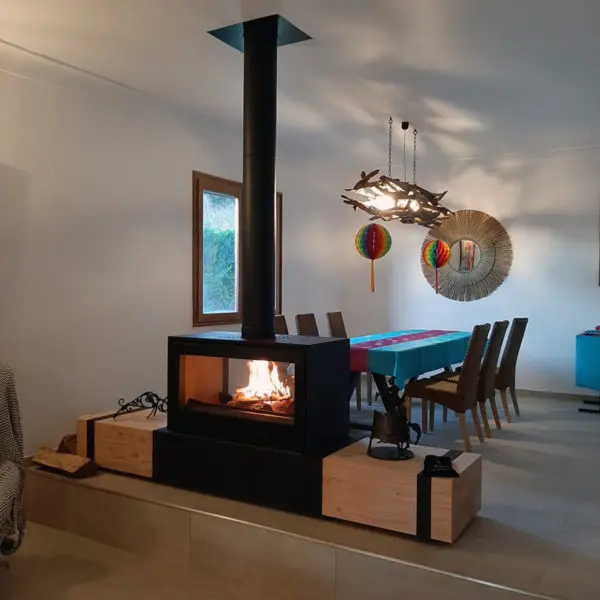
Besides wood-burning stoves, there are other ways to heat homes, such as electric heating, gas boilers, or oil-fired boilers. So why choose a wood-burning stove?
The wood-burning stove: an independent and cost-effective heating solution.
Log-burning stoves are self-sufficient heating appliances that do not require an electrical connection to operate. Although the fuel is loaded manually, the cost of producing heat is far more economical than with electric heating, for example.
Heating in an environmentally friendly way
Compared with other so-called “traditional” heating methods, heating with wood is recognised as an environmentally friendly solution. Wood is a renewable energy source with a low environmental impact, unlike fossil fuels.
An ideal supplementary heating solution
Wood-burning stoves are often used as supplementary heating or during the mid-season, so as to avoid running the central heating continuously. They help to reduce energy consumption while providing a pleasant level of warmth.
To guide you in choosing and installing your wood-burning stove, do not hesitate to contact a Seguin expert
What financial assistance is available for purchasing a wood-burning stove?

Buying a wood-burning stove represents a significant investment for many households. Fortunately, there are various forms of financial support available to help you with this purchase.
Tax credits
Installing a high-performance, energy-efficient wood-burning stove may allow you to benefit from tax credits. These grants are subject to certain conditions, particularly if your appliance is Flamme Verte certified. Check with your installer or the relevant authorities to find out what steps to follow.
Local grants.
Some local authorities (regions, departments, municipalities) also offer financial support for the purchase of wood-burning stoves. The amount and eligibility conditions vary depending on the area. Do not hesitate to enquire with your local council or regional authority.
Government grants.
At national level, government schemes such as MaPrimeRénov’ can also help you benefit from financial support for the purchase and installation of your wood-burning stove. Here again, eligibility conditions need to be checked.
By combining these various financial aids, you can significantly reduce the cost of purchasing your wood-burning stove.
What budget should you plan for when investing in a wood-burning stove?
When planning to purchase a wood-burning stove, it is important to have an overall view of the budget required. This includes not only the cost of the appliance itself, but also that of materials and labour.
The cost of the appliance.
The price of a wood-burning stove varies depending on the brand and the appliance’s features. With a budget of around €2,500, you can find entry-level models suitable for supplementary heating. However, it is recommended to opt for higher-quality appliances, typically priced between €3,500 and €5,000, which offer better performance, reliability and autonomy. Beyond this range, you enter the high-end segment, with more specialised models designed to heat larger spaces. Above €5,000, you will also find appliances such as pellet inserts or masonry stoves.
The cost of materials.
In addition to the appliance, you will need to budget for the technical components required for installation, such as the flue, roof outlet, connections, air intake grilles, etc. Typically, you should allow between €1,000 and €3,000 for these materials.
Labour costs.
Finally, labour costs for installation can range from €500 to €2,000, depending on the scope of the work (creating a flue, removing an old appliance, etc.).
Ultimately, the total cost of investing in a wood-burning stove can range from €3,500 to €8,000. However, don’t forget that financial support such as MaPrimeRénov’ can significantly reduce the overall cost.
Blog & conseils
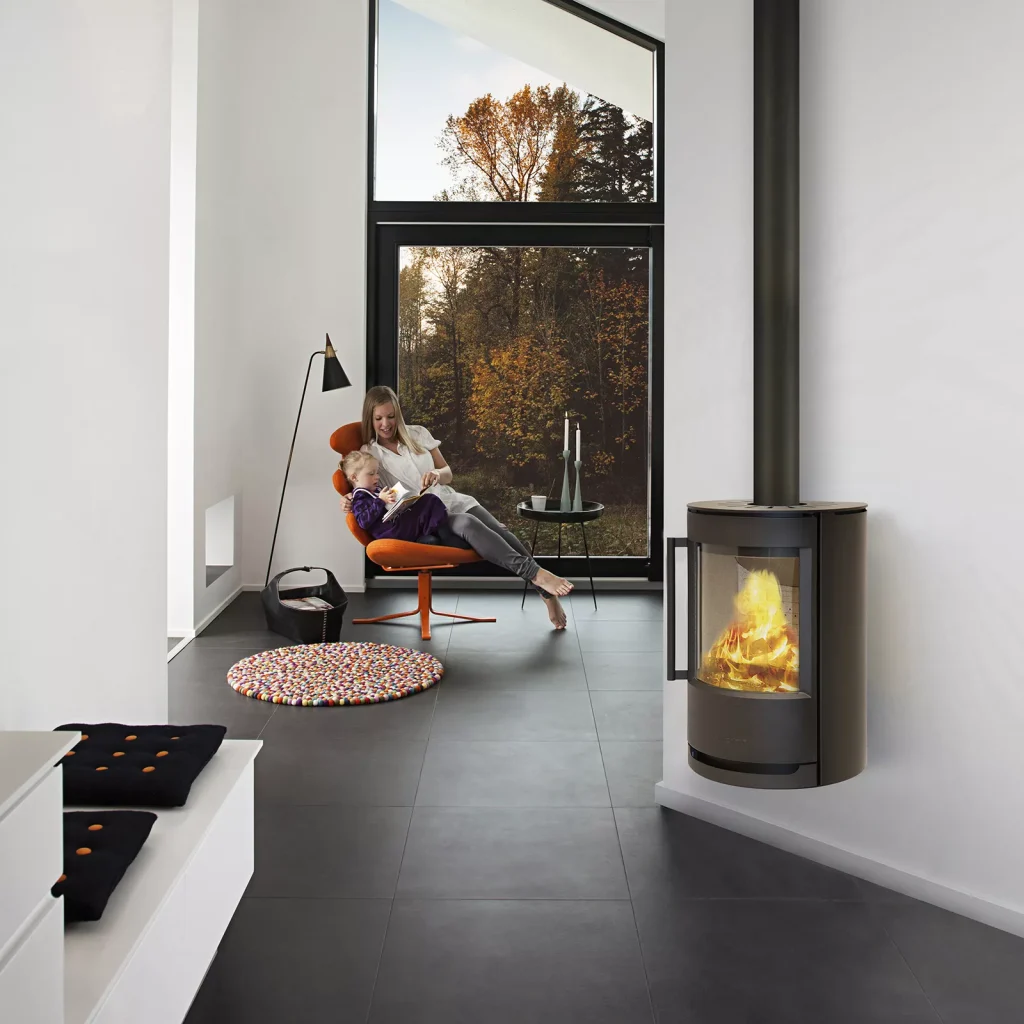
How do you choose a wood-burning stove?
Factors to consider before choosing a wood-burning stove 1. The stove’s heat output The first question to ask is: What do you intend to use this wood-burning stove for? Will it be your main source of heating, or simply a supplementary or decorative appliance? To determine the appropriate heat output, you need to take into […]
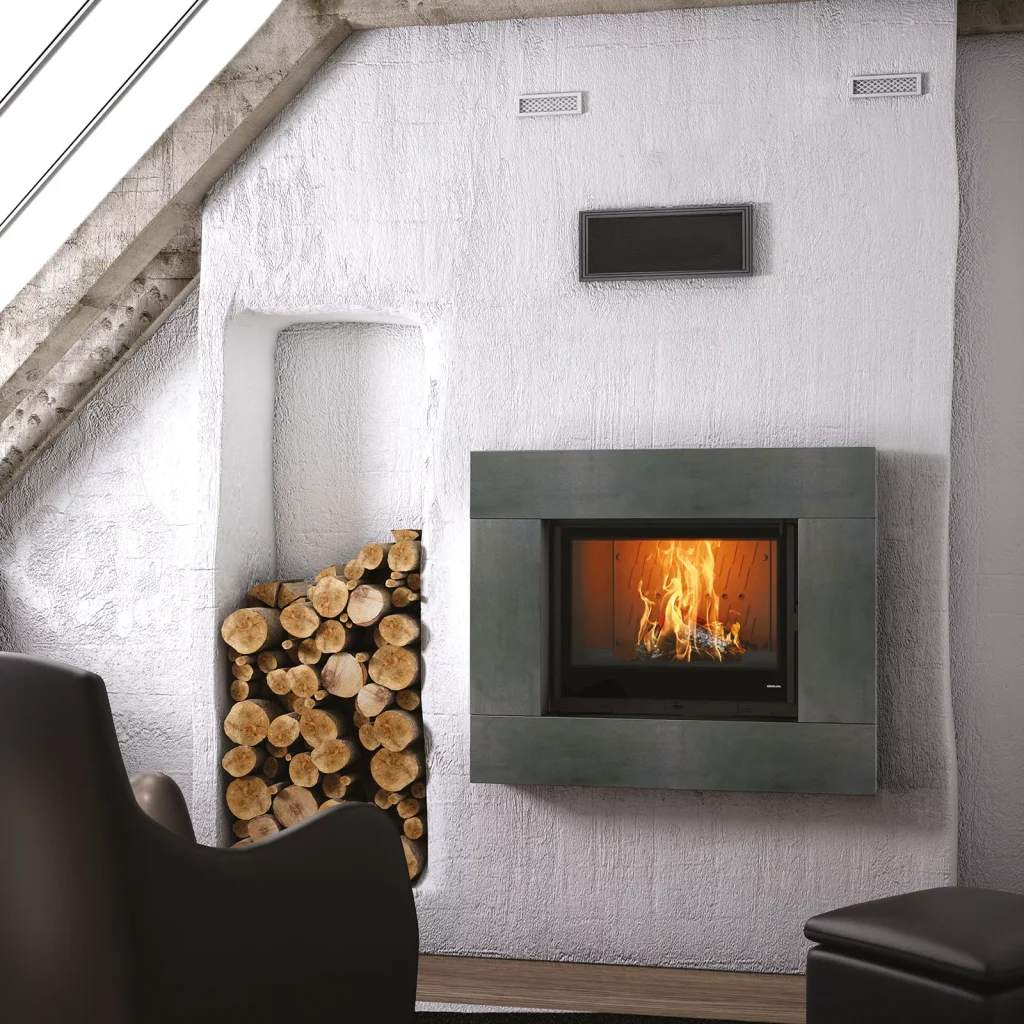
What are the benefits of heating your home with wood?
More energy-efficient and more environmentally friendly? Wood fuel is a local resource that is sourced and utilised within a short supply chain, with limited supply ranges. The firewood used to fuel our heating appliances remains within the regional area of production, often at distances of less than 100 km, unlike fossil fuels, which often come […]

What financial support is available for purchasing a fireplace or a wood-burning stove?
Are you looking to install a fireplace or a wood-burning stove? Be aware that several forms of financial support are available to encourage the energy transition and promote the use of more environmentally friendly and efficient heating appliances. Here is an overview of the available support schemes. The MaPrimeRénov’ scheme MaPrimeRénov’ is a grant introduced […]
Wood-fired heating: an essential contribution to managing winter peak electricity demand
With the electricity grid under severe strain this winter, the Renewable Energy Association points out that domestic wood heating plays a vital role in reducing evening peak demand during the winter. According to an IFOP survey conducted for the Poujoulat Group among a representative panel of 400 households using wood-burning equipment, the power demand avoided […]