
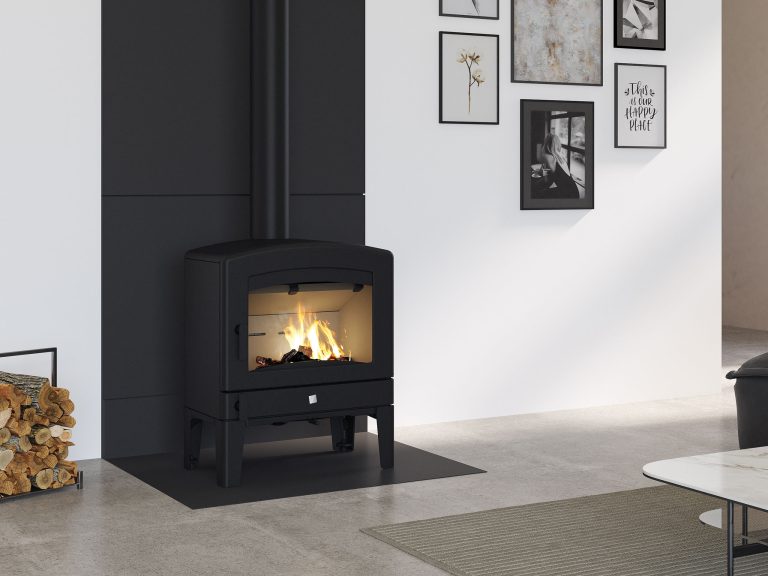



To get the most out of your wood-burning stove, don’t forget to consider its air supply. Should it draw air from the room or be connected to the outside? Here’s how to choose.
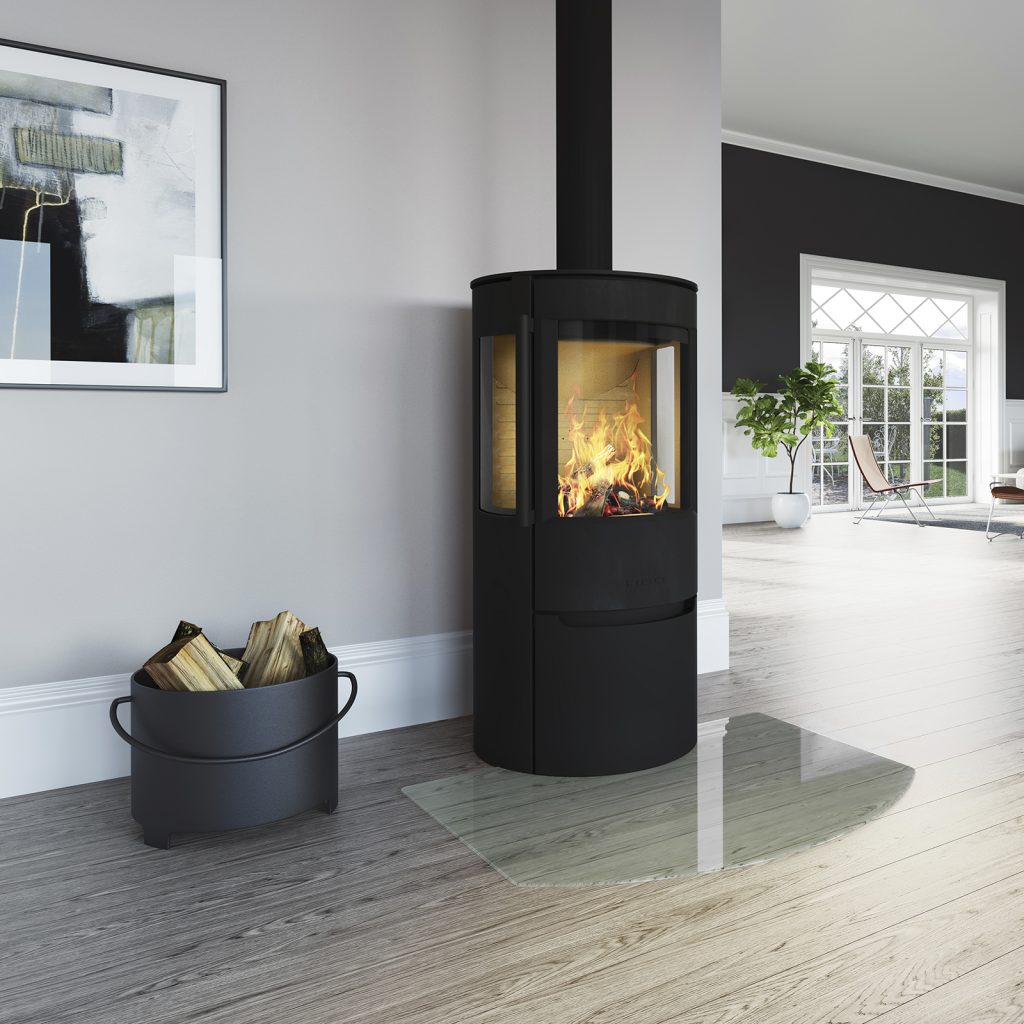
What is the purpose of the air inlet on a wood-burning stove?
Whilst the design and the view of the flames are important factors in choosing a stove, so too is its air intake: it provides the oxygen needed for combustion. An insufficient air supply makes it difficult to light the fire and encourages soot build-up.1 This air supply must be planned for right from the start of the project.
In a naturally draughted log-burning stove, the hot flue gases rise up the flue. This draught helps to draw air into the firebox. The air intake, the stove and the flue all work together: your installer will assess them as a single unit.2
The combustion air feeds the fire; the ventilation system refreshes the air in the house; the flue carries away the fumes. Each component fulfils its role, even when the stove draws in outside air directly.3
Ambient air or external connection: which solution should you choose?
The stove draws air from the room
L’air nécessaire au feu est prélevé dans la pièce, qui doit recevoir assez d’air neuf. Selon l’installation, une ouverture permanente vers l’extérieur est aménagée. Même dans une maison ancienne, l’installateur vérifie cet apport : les infiltrations ne suffisent pas toujours.2,4
The stove is connected to an external air intake
With a unit designed for this connection, a duct carries outside air to its air intake. This is a solution worth considering in a new-build or renovated house, where air infiltration is limited. ADEME recommends taking this air supply into account when choosing the location.5
The Wiking Luma 3, supplied by SEGUIN, offers this option for connecting to the outside air. Your installer will help you choose an air supply system suited to the model and your home.
What does ‘sealed stove’ mean?
A stove with a sealed combustion chamber is designed to operate with the door closed, using a system that is separate from the room’s air supply: it draws in outside air and expels flue gases via the appropriate flues.9 The option to connect an external air intake is a separate feature. Please refer to the model specifications.
How do you plan an installation that’s right for your home?
The regulations stipulate that, for the appliances in question, there must be a continuous supply of fresh air into the room. The Order of 23 February 2009 remains in force: in particular, it provides for exceptions where outside air is supplied directly to the fireplace or where the ventilation system meets the conditions set out in the Order.4
A direct connection to the outside is therefore not compulsory in all homes. The choice depends on the stove and the ventilation system.4
Things to check before installation
Before installation, discuss these Agence Qualité Construction checkpoints with your installer:2
- the air path to the stove and the effective cross-sectional area of the opening;
- the location of the air inlet and ensuring it remains unobstructed;
- compatibility with the flue and extraction systems;
- operating settings, explained during commissioning.
Mechanical ventilation and cooker hoods are also covered in this guide: air extraction can disrupt the draught.4 Are you replacing windows or making changes to the ventilation system? Please report any such work so that the stove’s air supply can be checked.6
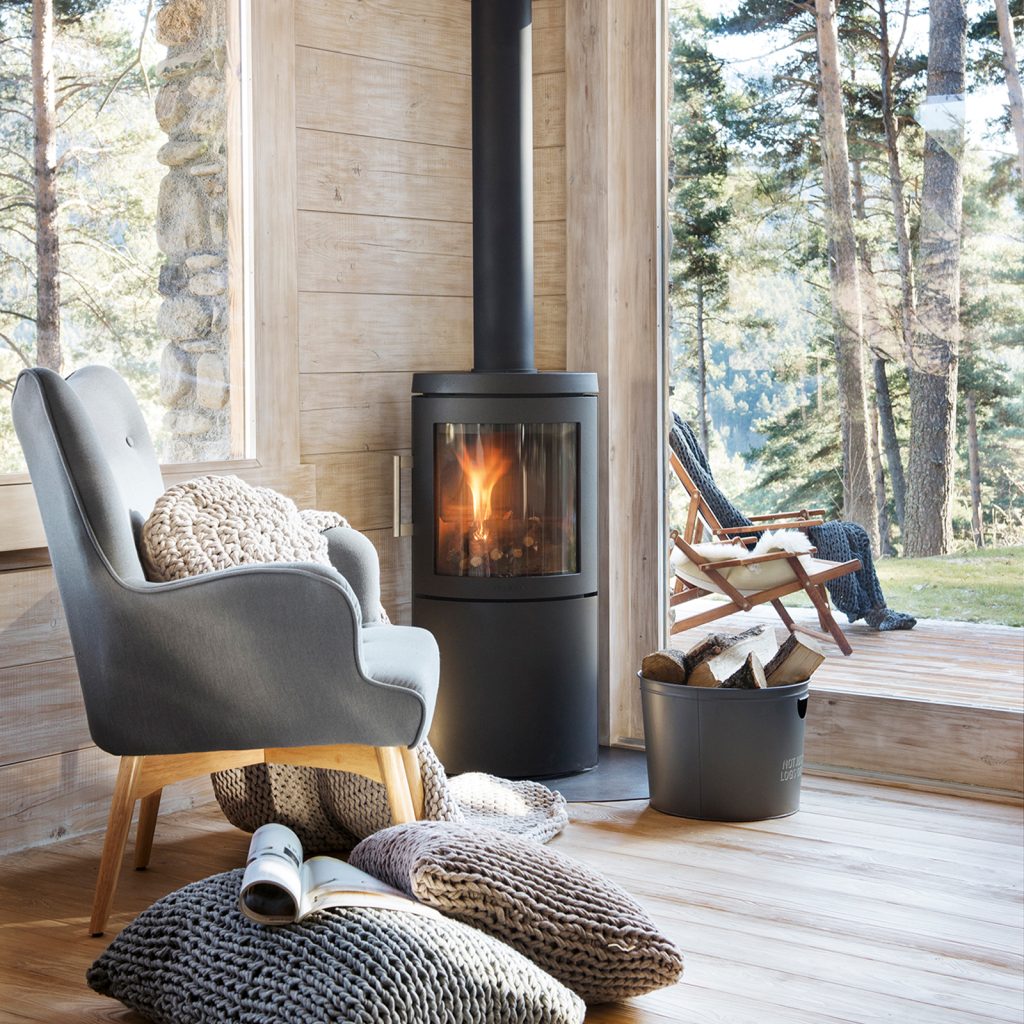
What steps should you take to get the most out of your stove?
Choose suitable wood. Use split, untreated and dry logs with a moisture content of less than 20 per cent. Follow the size and load recommendations given in the instructions.10
Take care when lighting the fire. Open the air controls to the ignition position specified by the manufacturer. If your stove automatically regulates the air supply, follow its instructions. For a reverse-stacking method, place the logs at the bottom, followed by kindling and then firelighters on top, ensuring air can circulate freely. Once the fire is established, adjust the settings as per the instructions, without smothering the flames.10
Keep the air vents clear. Check the grilles and regularly remove the ash from the ash pan – if your stove has one – once the appliance and the ash have cooled completely. Follow the ash-removal instructions for your model and close the ash pan before use.11
Plan your maintenance. These steps complement professional maintenance, which includes inspecting and cleaning the air inlets.8
What if a problem persists?
If the glass blackens quickly or the fire dies down, the system should be checked: the wood, the settings and the flue may also be to blame.1 A professional from the SEGUIN network will be able to identify the cause of the problem. If smoke is backing up, have the installation checked before using it again.
If you suspect carbon monoxide poisoning (headache, nausea, feeling unwell), ventilate the area if possible, evacuate immediately and call 15, 18 or 112.7
Key points
- The air supply must be planned in conjunction with the stove, the flue and the ventilation system.
- An external connection depends on the appliance’s specifications.
- Air inlets must remain unobstructed, even in winter.
Your questions about the air intake
It depends on its design. The system must take into account the stove’s additional requirements under the conditions set out in the regulations.4
It depends on the unit and the airflow path. The installer checks the effective cross-sectional area, which takes the grille into account: the diameter alone is not enough.2
No: opening a window occasionally is no substitute for the air supply provided for the stove. If the stove does not work properly with the windows closed, have the installation checked.
Sources
3. France Rénov’ – Ventilation simple flux, rôle de la ventilation du logement.
5. ADEME – Adopter le chauffage au bois, édition octobre 2024, choix de l’emplacement et arrivée d’air.
Original sources consulted on 30 September 2026; sources for standard procedures verified on 27 October 2026.
Blog & tips
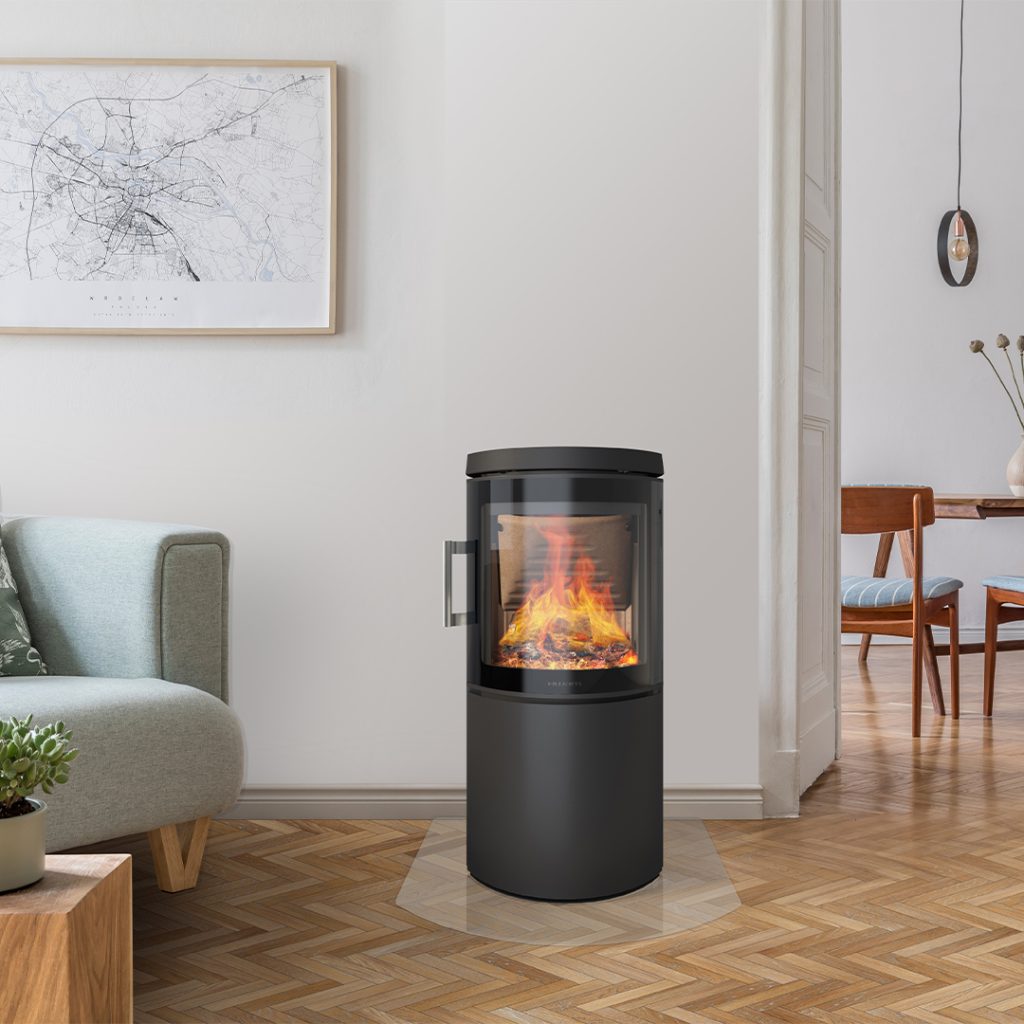
How do you choose the ideal heat output for your wood stove?
The heat output of a wood stove is one of the most important factors in ensuring efficient and economical heating. An improperly sized stove can lead to excessive fuel consumption, reduced comfort, or premature wear and tear. What factors should you consider when determining the right output for your home? Let’s take a closer look […]
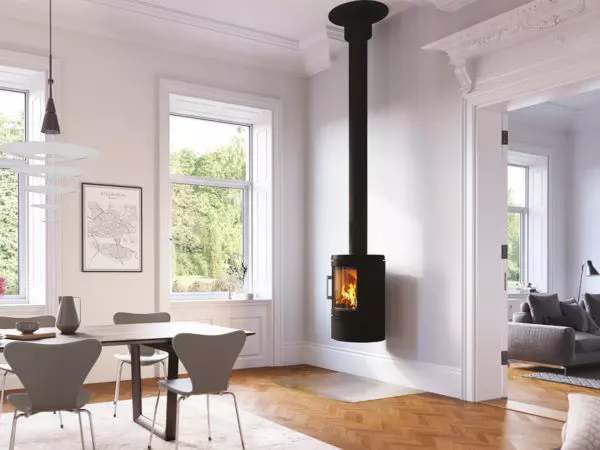
4 common misconceptions about wood heating
Heating with wood? It’s too expensive, not always efficient and, on top of that, it pollutes! That’s what you often hear when wood heating is mentioned. But what is the reality? Evolving technologies, increasingly efficient products, government regulations and environmental targets… all of this may well put an end to the misconceptions surrounding wood heating. […]
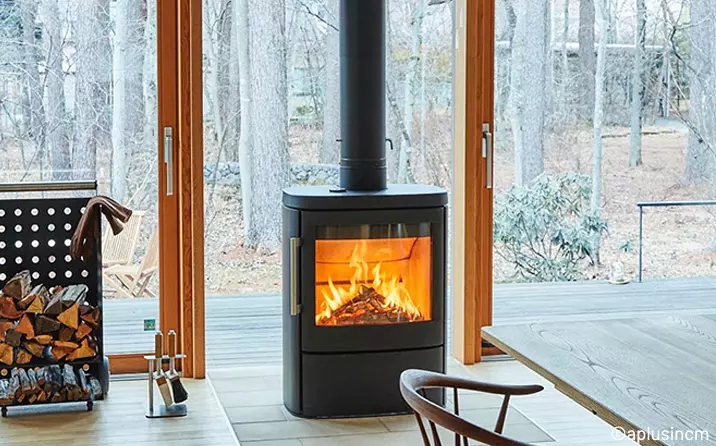
How to install a wood-burning stove: complete guide and key steps
Installing a wood-burning stove in your home is a project that requires careful preparation and compliance with numerous safety standards. Whether you plan to have your appliance installed by a professional or are considering installing it yourself, it is essential to fully understand each step. Before starting the installation process, take a look at our […]

Find out how to get free firewood.
Even today, wood-fired heating remains the cheapest energy source on the market. However, given the current circumstances, it may be worth looking into ways of obtaining firewood for free. We’ll tell you everything you need to know about how to get hold of firewood. Go through a professional You might not realise that these days, […]