Simplified installation
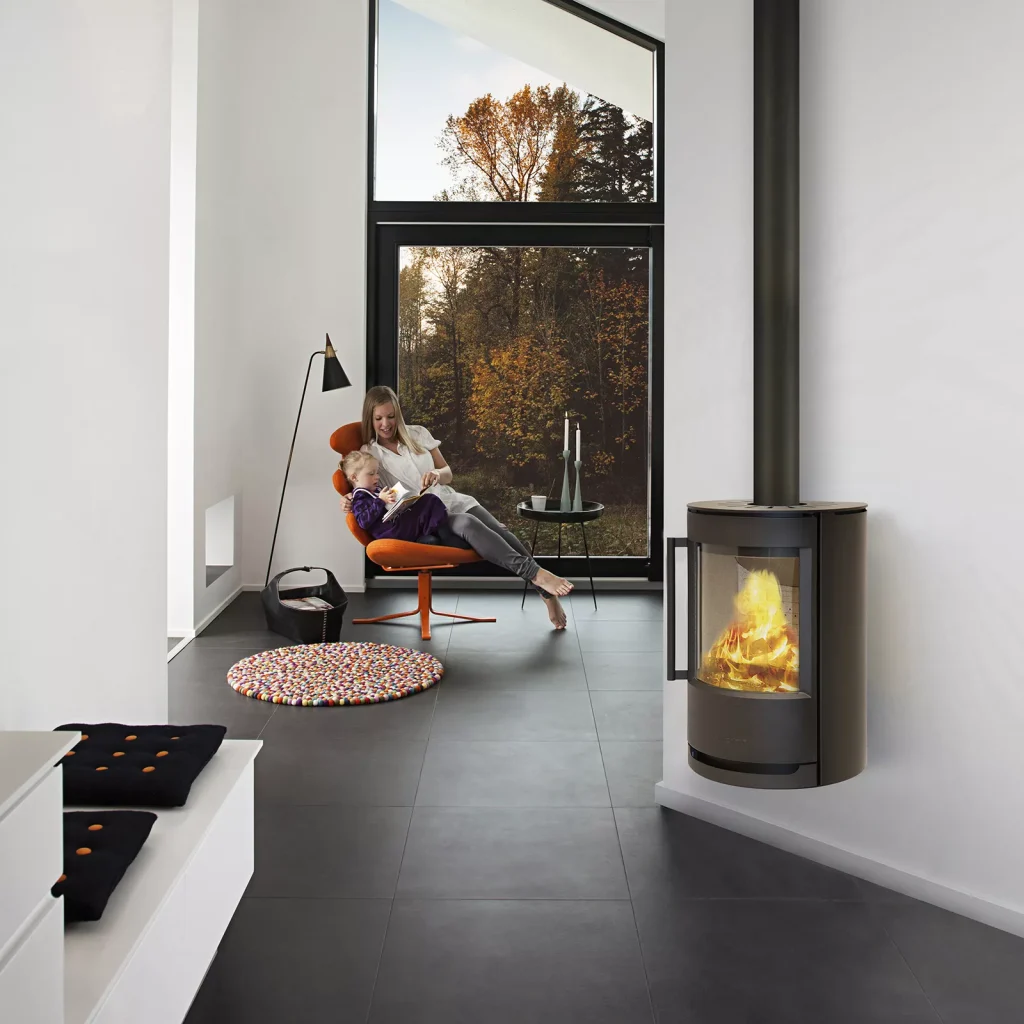
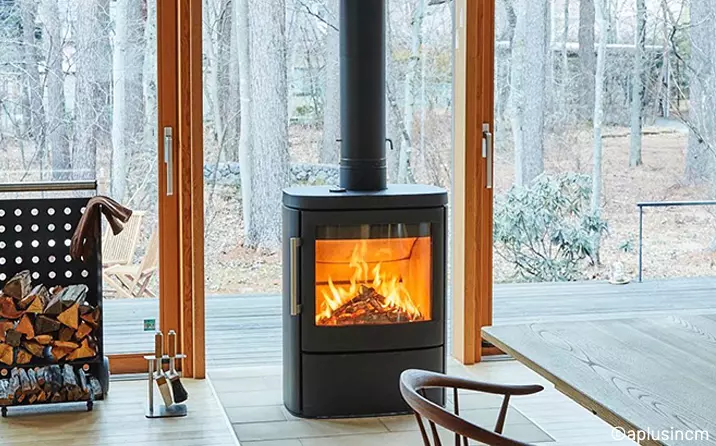
Thanks to its design, a wood stove can be installed fairly easily, even in an existing home. Simply connect it to the chimney flue—no complex work required.
A portable heating solution
If you move, you can usually take your wood stove with you, unlike a fireplace, which is fixed in place. This is a significant advantage if you change homes.
A wood stove is an attractive, eco-friendly heating solution for your home. Its simple operation and numerous benefits make it an option worth considering for efficient and comfortable heating.
How a wood stove works
A wood stove operates on a fairly simple principle. Here’s how it works:
- First, you fill the firebox with logs or wood pellets, depending on the type of stove.
- Next, you light a fire in the firebox to start the wood burning.
- The heat produced by this combustion then spreads through the stove’s casing, which is usually made of cast iron or steel.
- This casing then gradually diffuses the heat into the room through radiation and convection, thereby warming the ambient air.
- Finally, the gases produced by combustion are vented through the connection to the flue.
It is worth noting that some modern wood stoves are equipped with advanced combustion systems and automated controls. These technologies help optimize the stove’s efficiency and reduce pollutant emissions.
Wood Stove Output: An Essential Consideration
When choosing a wood stove, it is important to consider its output. This determines the area the stove can heat effectively.
A stove’s output is generally measured in kilowatts (kW). It corresponds to the maximum amount of heat the stove can produce in one hour of burning. Stoves with outputs ranging from approximately 5 to 14 kW are commonly available.
To choose a stove suited to your needs, you must calculate the heating requirements of the room where it will be installed. To do this, several factors must be considered:
- The floor area of the room to be heated
- The quality of your home’s insulation
- The volume of the room to be heated
- The climate conditions in your region
If you choose a stove with insufficient heat output, it will not be able to heat the room properly. Conversely, a stove that is too powerful may cause excessive combustion and thus waste wood.
To accurately determine the rated output you need, it may be wise to seek advice from a professional. They will be able to take into account the specific characteristics of your home and guide you toward a stove suited to your needs.
The dimensions of the wood stove: an aspect not to be overlooked
When considering installing a wood stove, you shouldn’t focus solely on its output. The stove’s dimensions are also a crucial factor to consider. They will determine the space it occupies in the room and its ability to heat the desired area efficiently.
Here are the main dimensions to consider:
- Height: Most wood stoves are between 80 cm and 1.20 m tall. You need to allow for sufficient height to easily load logs while maintaining enough space between the stove and the ceiling.
- Width: The width of a stove can range from 40 cm for the most compact models to 80 cm for the largest ones. It is important to leave enough space around the stove to facilitate maintenance.
- Depth: The depth of a stove is generally between 40 cm and 60 cm, depending on the size of the firebox and the space allocated for storing logs.
- Firebox dimensions: The volume of the firebox determines the maximum size of the logs that can be used and the stove’s burn time.
It is also important to consider the constraints of the space where the stove will be installed: available floor space, ceiling height, safety distances from combustible materials, etc.
By choosing a stove with the right dimensions, you ensure optimal heating while preserving the aesthetics and functionality of your interior.
The efficiency of a wood stove: an important criterion
To assess the efficiency of a wood stove, efficiency is a key factor to consider. It refers to the proportion of heat actually released into the room relative to the energy contained in the burned wood.
Modern wood stoves generally have an efficiency rating between 70% and 85%. In other words, 70 to 85% of the wood’s energy is converted into useful heat to warm your home.
These high efficiency levels are made possible by various technologies:
- Dual-combustion systems that allow for more complete combustion of gases and particles
- Air intake regulation to better control combustion
- Heat-retaining heating elements that release heat gradually
- An "airwash" glass panel that stays clean during combustion thanks to a flow of hot air
By comparison, a traditional open fireplace has a much lower average efficiency, typically only 10 to 30%.
Thanks to their superior efficiency, wood stoves require less wood to produce the same amount of heat. Over the long term, this can result in significant savings on your firewood consumption.
Connected wood stoves:
At SEGUIN, we offer a market innovation: connected wood stoves. HWAM® SmartControl™ allows you to optimize combustion and, consequently, your efficiency.
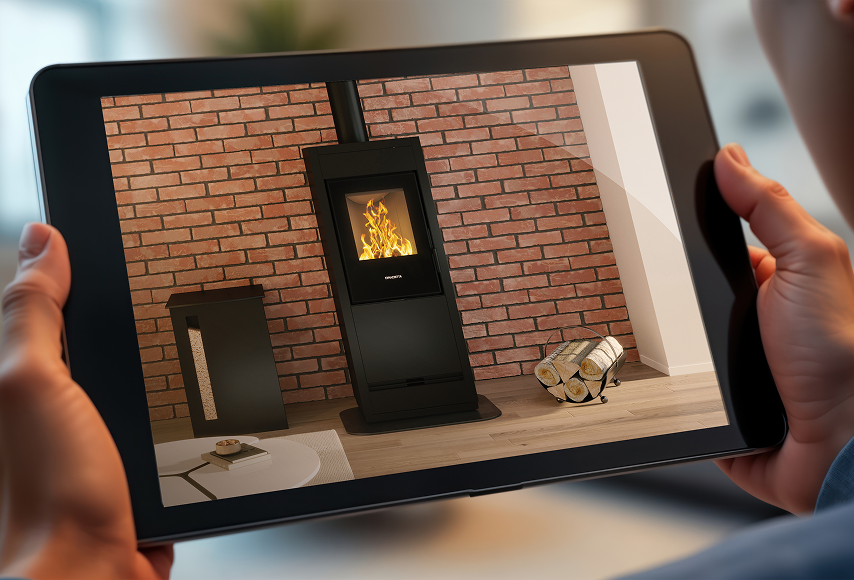
HWAM® SmartControl™ transforms the stove into a smart device when connected to Wi-Fi. This system ensures compatibility between its various components, their continuous updates, and optimal operation.
The goal of HWAM® SmartControl™ is to make using the stove as simple as possible, while ensuring efficient and environmentally friendly combustion. This improves user comfort, reduces environmental impact, and saves energy.
Stoves equipped with HWAM® SmartControl™ feature several additional components compared to standard models. They include an air control system, a lambda probe to measure oxygen levels, a temperature sensor to monitor heat inside the stove, and a room sensor to adjust combustion based on ambient temperature. All these elements are controlled via a mobile app, which serves as the control center.
The user has only one task: load the firewood and light the fire. Then, HWAM® SmartControl™ takes care of the rest by automatically optimizing combustion.
Watch the video to learn more about HWAM® SmartControl™:
Easy-to-use wood stoves
Discover a new way to heat your home with HWAM® Autopilot™: simplicity and efficiency.
With HWAM® Autopilot™, enjoy optimal comfort without worrying about settings. This smart system automatically adjusts the air supply to your wood stove, ensuring efficient and economical combustion.
Thanks to a bimetallic spring, the HWAM® Autopilot™ reacts to temperature changes in the combustion chamber. It opens or closes the air dampers to provide the ideal amount of oxygen, thereby optimizing heat output and reducing wood consumption.
Its main advantage? No manual adjustments are needed. You light your fire, and the system takes care of the rest. This means less effort, better performance, and a reduced environmental impact.
All HWAM stoves come standard with the HWAM® Autopilot™, for simple, efficient, and hassle-free use.
Watch the HWAM® Autopilot™ video:
Which firewood should you choose for your wood stove?
To ensure your wood stove operates at its best, it’s important to use high-quality fuel. Choosing the right logs is essential for efficient and eco-friendly combustion.
Here are a few points to consider when choosing firewood:
- Wood species: It is best to choose hard, dry woods such as beech, hornbeam, or oak. They offer better heat output.
- Moisture content: Logs must be sufficiently dry, with a moisture content below 20%. Wood that is too damp releases less heat and produces more smoke.
- Dimensions: It is important to follow the dimensions recommended by your stove manufacturer. Logs that are too long or too thick may not burn properly.
- Condition of the logs: It is best to avoid logs that are split, knotty, or have a lot of bark, as they can cause sparks to fly.
For optimal and eco-friendly heating, it is recommended to use certified firewood from sustainably managed forests. Feel free to consult your firewood supplier or a wood stove professional for advice tailored to your situation. Check out our article on how to choose the right firewood.
Wood Stove Prices: What You Need to Know
When considering the purchase of a wood stove, cost is an important factor to consider. Prices can vary significantly depending on several factors:
- Materials: A cast-iron stove will generally be more expensive than a steel or ceramic model.
- Heat output: The higher the stove’s rated heat output, the higher the price tends to be.
- Options and features: Air control systems, heat distribution systems, catalytic systems, etc., can drive up the price.
- Design and finishes: High-end models with a refined design are often more expensive.
As a general rule, the budget for a wood stove ranges from €2,000 to €3,500. This price range covers a wide variety of models, from the most basic to the most elaborate.
To help you choose a wood stove that suits your needs and budget, it may be wise to consult a professional. A wood heating specialist can advise you and guide you toward a model that meets your expectations and fits your constraints.
Different styles of wood-burning stoves to suit your interior
Wood-burning stoves are distinguished not only by their technical performance but also by their design and style. They can thus blend seamlessly into your interior decor while creating a warm and inviting atmosphere.
Here are the main styles of wood-burning stoves you may encounter:
Contemporary Style
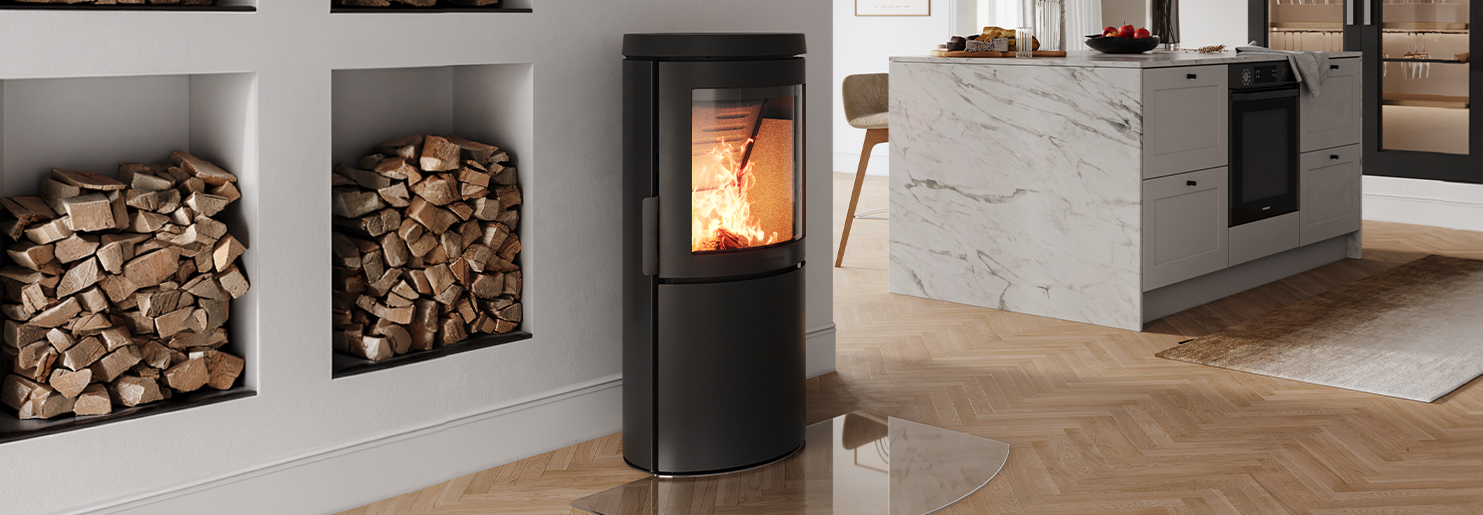
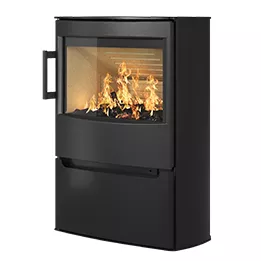
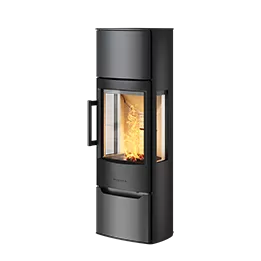
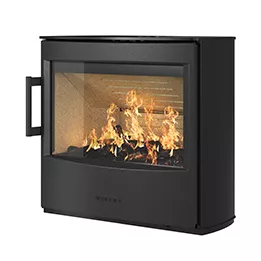
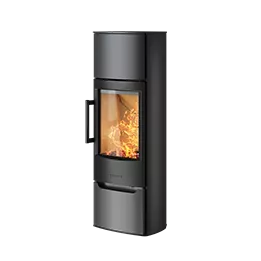
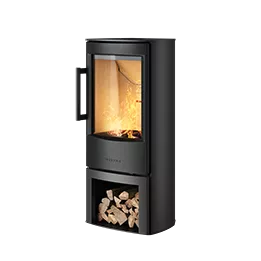
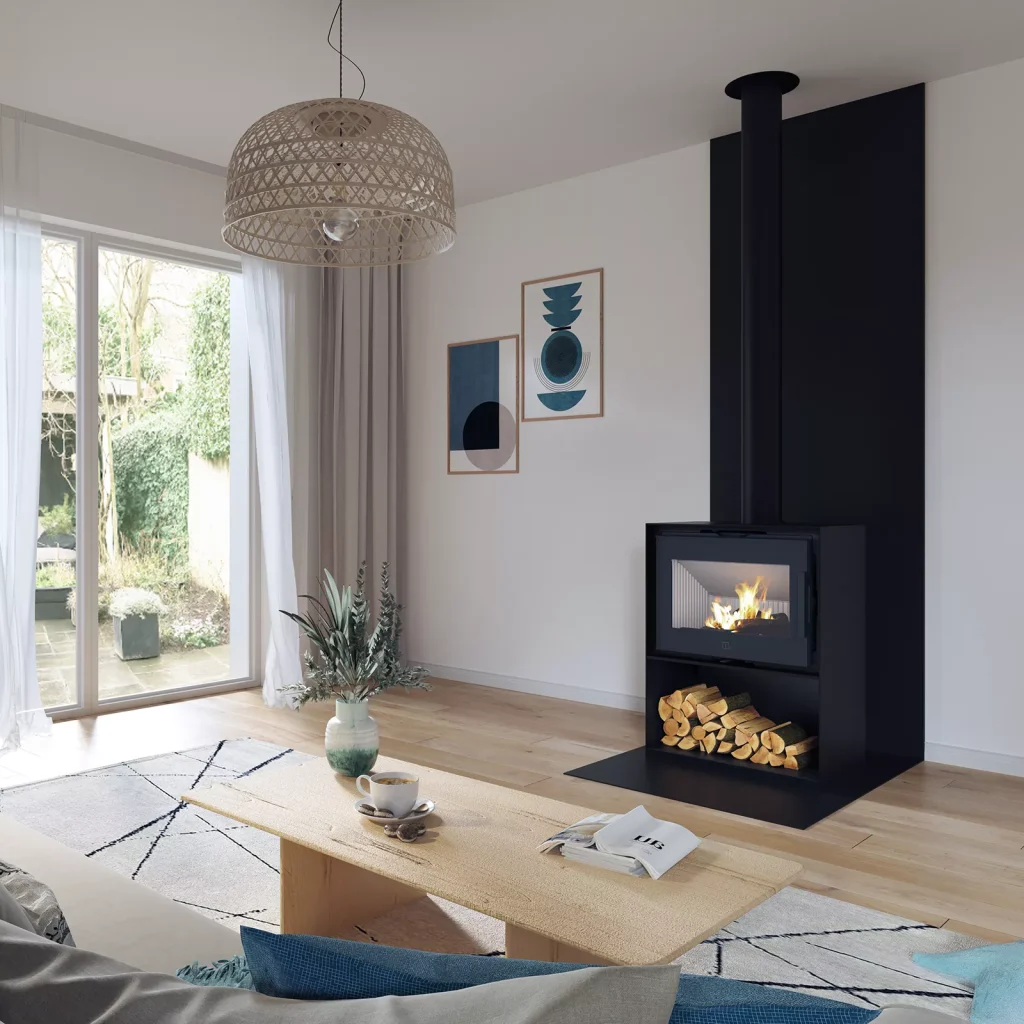
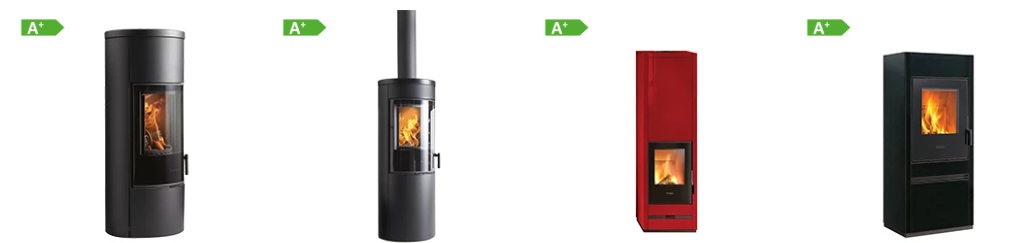
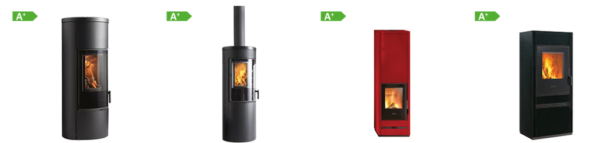
Contemporary wood stoves are characterized by clean lines, geometric shapes, and understated colors. They feature a minimalist and elegant design to complement modern interiors. These models are often made of steel or ceramic. They are generally referred to as designer wood stoves.
Traditional Style
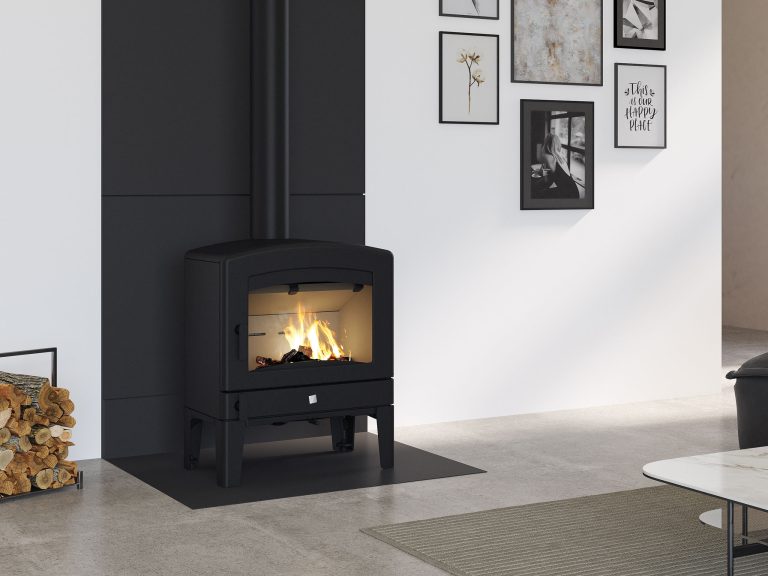
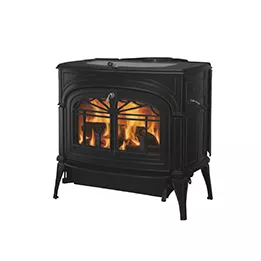
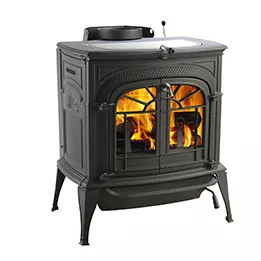
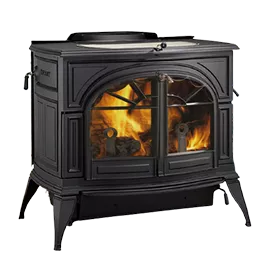
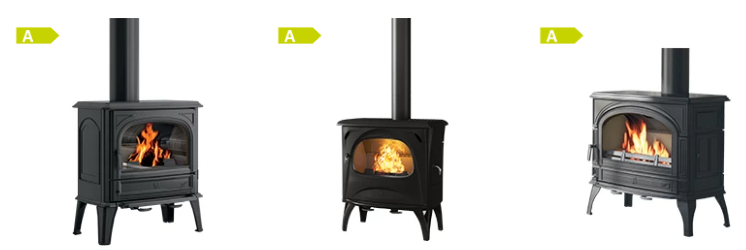
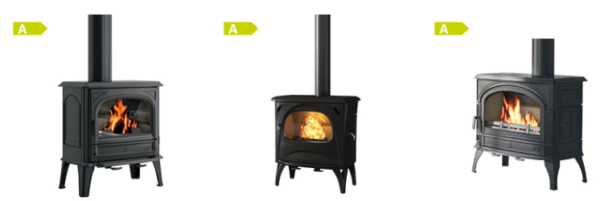
Cast iron stoves, with their generous curves and rounded lines, embody the traditional style. This timeless style evokes tradition and authenticity. It is particularly well-suited to homes with character or a chalet-style ambiance. Cheminées Seguin offers traditional wood-burning stoves.
Country Style
Country-style stoves often combine cast iron, earthenware, and sometimes even stone. They exude a warm, rustic charm. Their design fits perfectly into cozy interiors.
Retro style
Some stoves are inspired by models from the 1950s and 1960s, adding an original and quirky decorative touch. These vintage stoves with a retro look can add character to your home.
Wall-mounted style
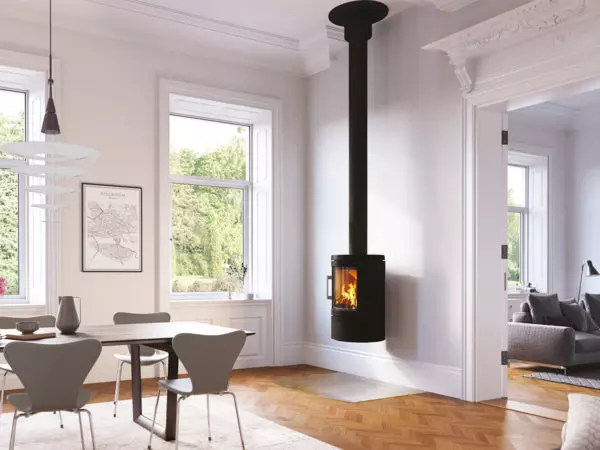
Wall-mounted or freestanding stoves offer a stylish installation right in the center of the room. These contemporary models can become a true decorative feature in your home.
Another category of stove is available on the market and at Cheminées SEGUIN: dual-fuel stoves that use both pellets and wood. This type of stove combines both heating systems.
Steps for the delivery and installation of a wood stove
Stove Delivery
Before proceeding with installation, it is important to consider the delivery of your wood stove. Delivery times can vary from a few days to several weeks, depending on the model and brand you choose. It is advisable to check with the supplier regarding delivery times. Also ensure that access points allow the stove to be moved to the desired location without difficulty.
Preparing the location
Choose a suitable location for your stove, ensuring that safety distances from combustible materials are maintained. Verify that an appropriate chimney flue is available.
Installing the flue
The stove must be connected to a sealed, insulated flue that is properly sized to allow for efficient smoke exhaust.
Installing the stove
The stove must be installed on a suitable floor surface, typically a hearth or a fireproof base, while adhering to the safety distances recommended by the manufacturer.
Connecting to the flue
The stove is connected to the chimney flue using an appropriate connecting pipe. It is important to avoid sharp bends during installation.
Additional equipment
If necessary, install any additional equipment such as an external air intake, a pellet hopper, a hot air distribution system, etc.
Safety checks
Once installation is complete, it is essential to perform tests and checks to ensure the system is functioning properly and safely.
To assist you with the delivery and installation of your wood stove, don’t hesitate to call on qualified professionals. They will be able to advise you and perform an installation that complies with current safety standards.
Warranty and After-Sales Service for Your Wood Stove
When investing in a wood stove, it is important to inquire about the warranties offered and the quality of after-sales service. These factors can provide you with long-term peace of mind.
Wood Stove Warranty
Most wood stove manufacturers offer a warranty covering defects in workmanship and materials. The duration of this warranty may vary, but it is generally 5 years on the heating element. Some high-end models may even come with a warranty of up to 10 years.
Before making your purchase, be sure to review the specific warranty terms, which are detailed in each appliance’s manual.
After-sales service
Good after-sales service is essential to support you throughout the life of your wood stove. It is best to choose a manufacturer or retailer that relies on a network of trained professionals and responsive after-sales service.
If needed, you should be able to count on qualified technicians to answer your questions, guide you in the use and maintenance of your stove, or respond quickly for repairs.
Availability of Replacement Parts
Over the years, it may be necessary to replace certain parts of your wood stove. It is therefore important to ensure that the manufacturer or retailer has a large inventory of spare parts, even for older models. By choosing the SEGUIN Group, you ensure high-quality support for all spare parts
A quick supply of spare parts will allow you to keep your stove in good working order and enjoy its warmth for many years to come.
By choosing a wood stove with a solid warranty and quality after-sales service, you can have peace of mind and fully enjoy your heating appliance every day.